 Observia Editorial Team
Personal Protective Equipment compliance monitoring has evolved beyond centralized cloud processing. Modern approaches leverage edge computing to process and analyze data on-site, enabling real-time detection and response. Here’s your comprehensive guide to the leading PPE detection solutions deployed at the edge, from enterprise platforms to technical architectures.
Enterprise Solutions
1. Intenseye Sentinel
Sentinel represents a purpose-built device suite with embedded cameras and sensors running advanced computer vision models on site using NVIDIA Jetson Orin NX, with the Sentinel Hub powering connected devices and cameras to keep latency minimal and deliver subsecond processing for real-time decisions. The platform automatically detects helmets, high-visibility vests, gloves, and masks with 50+ categories of unsafe acts and conditions in real-time while preserving worker privacy. Intenseye maintains SOC 2 Type 2 certification to ensure strict security and compliance requirements, with privacy and data protection built into every deployment.
Edge Deployment Advantage: Subsecond inference latency enables immediate hazard response and machinery shutdown integration.
2. Observia AI
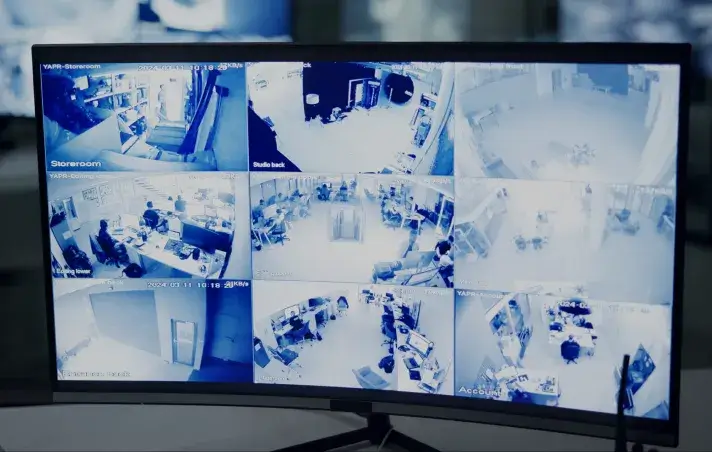
Observia adapts to your environment in real-time, allowing you to define PPE rules by location so you’re only alerted when context truly demands it. The platform integrates seamlessly with existing CCTV infrastructure and requires no additional hardware. Observia lets you define PPE rules by location, ensuring the right gear is worn in the right zone, every time. The system particularly excels in distinguishing when PPE is context-specific—for instance, full-body PPE in high-hazard zones versus partial gear in medium-risk areas.
Edge Deployment Advantage: Works with legacy and modern cameras without hardware replacement.
3. Protex AI
Protex specializes in detecting unsafe events involving PPE non-compliance, such as workers not wearing or improperly wearing hard hats, high-vis vests, goggles, masks, and gloves in indoor environments, with rule builder enabling precise monitoring of PPE compliance within designated facility zones. Protex AI deploys a “vision box” (edge device) at the facility, which processes video locally and sends only alerts and metadata upstream. This architecture maintains data privacy while ensuring real-time detection capabilities.
Edge Deployment Advantage: Local processing keeps sensitive video within facility networks while maintaining subsecond alert delivery.
4. Voxel AI
Voxel AI emphasizes operational intelligence alongside safety—they’re as interested in efficiency (forklift routing, congestion patterns) as they are in safety incidents, appealing to enterprises where safety and operations are closely integrated. The platform combines PPE detection with workplace efficiency monitoring, enabling organizations to optimize both safety and productivity metrics from a single video feed.
Edge Deployment Advantage: Multi-objective detection (PPE + operational metrics) reduces redundant camera infrastructure.
Technical Edge Computing Frameworks
5. NVIDIA Jetson-Based Deployments
NVIDIA Jetson Nano delivers 472 GFLOPs for modern AI algorithms, running multiple neural networks in parallel while processing high-resolution sensors concurrently at just 5 to 10 watts of power consumption. Lightweight versions of YOLOv5 have been developed to detect helmets in construction with real-time applications achieved on NVIDIA Jetson Nano. Organizations can deploy high-performance video analytics using Nvidia Deepstream on Jetson Nano with applications that detect, track and count people crossing with and without PPE at hazardous sites.
Technical Advantage: Open-source frameworks enable custom model training and deployment with minimal licensing costs.
6. Edge Impulse FOMO (Faster Objects, More Objects)
FOMO is a groundbreaking algorithm for object detection on constrained devices, 30x faster than MobileNet SSD and capable of running in under 200K of RAM, bringing real-time object detection to microcontrollers for the first time. Organizations can deploy FOMO-based models on NVIDIA Jetson Nano to monitor whether workers wear required PPE, with the system capable of detecting helmets, safety goggles, and safety reflective jackets with 91.7% model accuracy.
Technical Advantage: Ultra-lightweight models suit resource-constrained edge devices while maintaining detection accuracy.
7. Intel Myriad X Vision Processing Units (VPU)
The Intel Movidius Myriad X VPU includes a dedicated Neural Compute Engine for deep neural networks, delivering 10X performance compared to previous generations while featuring parallel detection of PPE, Face, Person, and Body parts leveraging CPU, GPU and VPU processors. This solution detects if a person is wearing a helmet and a high visibility jacket, allowing a person entry to a workplace only once all PPE checks are approved.
Technical Advantage: Purpose-built hardware acceleration reduces model inference latency without excessive power consumption.
Deployment Architecture Considerations
Privacy & Data Protection
Edge computing solutions ensure scalability and privacy by processing camera data directly within edge computing devices, obviating the need to transmit sensitive information outside the company, with implementation of deep learning systems enabling generalized threat detection without fine-tuning parameters for each scenario.
Real-Time Performance Metrics
Organizations deploying edge PPE detection report 25+ FPS real-time inference on 1080p camera streams with 50% decrease in PPE-related infractions within 60 days of deployment, and edge deployments lowering bandwidth requirements and latency by 35%.
Detection Accuracy & Customization
Edge-based solutions enable workers to define customized PPE requirements by location and shift—for example, Class A employees might require helmets and safety reflective jackets while Class B employees need safety goggles—with the system automatically enforcing location-specific rules.
Selecting Your Edge PPE Detection Model
Choose Enterprise Platforms (Intenseye, Observia, Protex, Voxel) if:
- You need turnkey solutions with dedicated support
- Multiple facility locations require standardized monitoring
- Integration with existing EHS software is critical
- Your safety team lacks AI/ML technical expertise
Choose Technical Frameworks (Jetson, Edge Impulse, Myriad X) if:
- You have in-house data science or engineering capability
- Custom detection scenarios require model retraining
- You need maximum flexibility and cost control
- Your deployment timeline allows for development and validation
The Edge Advantage
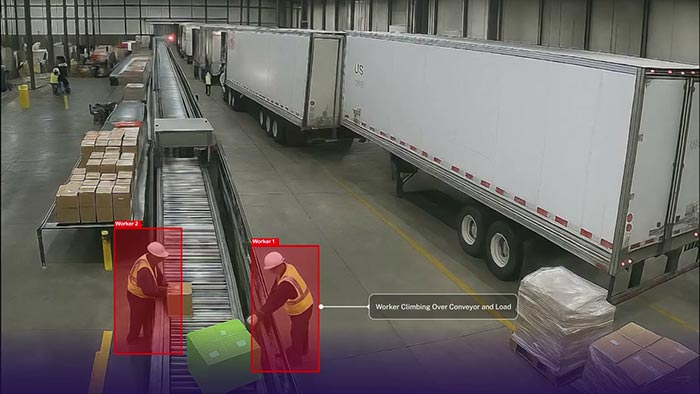
Modern edge computing solutions provide real-time detection through immediate alerts for PPE violations, enabling quick intervention by supervisory staff and reducing safety risks, while data-driven insights help optimize PPE inventory and distribution. The combination of local processing, instant response capabilities, and preserved privacy represents the frontier of workplace safety technology.