 Observia Editorial Team
Most organizations do not struggle with workplace safety because they lack policies.
They struggle because risk develops between the moments those policies are checked. Inspections are periodic. Audits are retrospective. Incidents are continuous.
This gap is where AI for workplace safety is increasingly being adopted, not as a replacement for safety teams, but as a way to make real work visible while there is still time to intervene.
This guide compares 13 leading AI-powered workplace safety platforms used by EHS leaders and operations teams evaluating how behavior-based intelligence can scale prevention across their organizations. The focus is not on claims, but on how each system detects risk, where it fits operationally, and what tradeoffs buyers should expect.
How to Read This Guide
All platforms listed here contribute to workplace safety programs. They differ meaningfully in detection approach, deployment philosophy, and operational fit.
Detection Approach
Tracks repeated unsafe behaviors over time; focuses on frequency and cumulative exposure. Best for long-term risk reduction.
Flags individual unsafe acts; focuses on single violations and compliance events. Best for immediate compliance documentation.
Monitoring Style
Immediate alerts enable on-the-spot coaching and behavioral correction. Requires active monitoring infrastructure.
Post-incident or shift-end review for program improvement and trend analysis. Works with recorded data.
Risk Visibility
Captures behavioral risk as it accumulates; leading indicator focus. Prevents incidents before they occur.
Documents violations and incidents; lagging indicator focus. Supports regulatory accountability.
Deployment Model
Out-of-the-box deployment with industry-specific models; minimal configuration. Quick time-to-value.
Customizable AI layer; requires tuning and integration expertise. Maximum flexibility for complex needs.
1. Observia.ai | Continuous Behavioral Risk Pattern Detection
Best for: Organizations embedding AI into continuous behavioral safety programs.
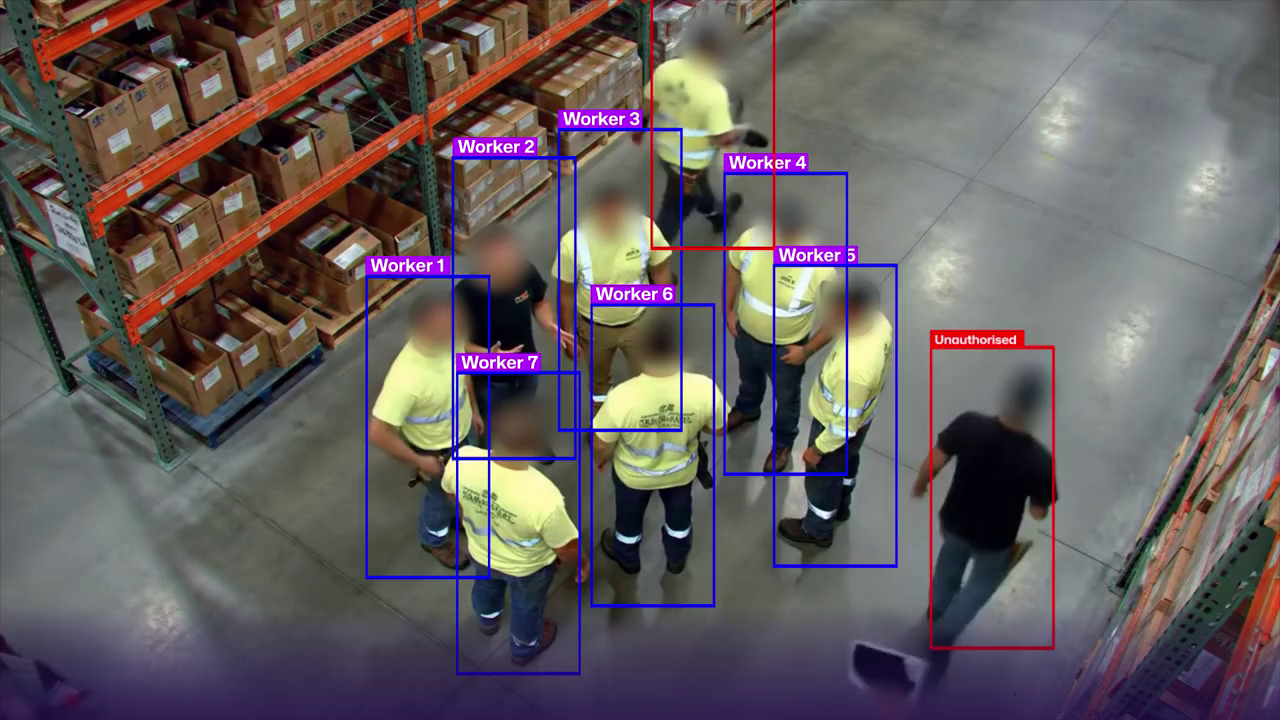
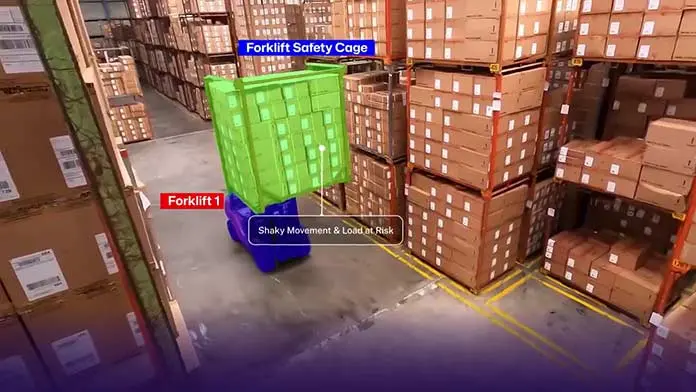
Observia focuses on behavior frequency and accumulation, not individual compliance scores. Using AI video analytics, it identifies unsafe acts, PPE non-compliance, proximity risks, unsafe equipment interaction, ergonomic strain and tracks how often they occur across shifts, locations, and worker groups.
The system is built on the principle that most incidents start as repeated behaviors. Instead of alerting on violations, it surfaces where patterns are forming.
Workplace safety capabilities:
- Detection of repeated unsafe behaviors (PPE, proximity, lifting, equipment interaction)
- Exposure pattern mapping by location, shift, and task
- Real-time behavioral alerts with intervention support
- Trend analysis across multi-site operations
- Leading indicator dashboards
Operational strengths:
- Integrates with existing camera infrastructure
- Designed for continuous observation, not periodic audits
- Scales behavioral safety across dispersed teams
- Reduces alert noise through pattern prioritization
- Supports coaching-based intervention
Limitations:
- Requires camera coverage in work zones
- Less suited for office or administrative environments
- Depends on clear intervention workflows
Where it fits best: Manufacturing, logistics, warehousing, and construction where behavioral risk accumulates through repeated acts in physical environments.
🛡️ What is Observia Best For
Continuous monitoring and improvement for organizational safety
Key Capabilities
- Real-time behavior monitoring and analysis
- Automated incident detection and reporting
- Continuous learning from safety patterns
- Predictive risk assessment
- Integration with existing compliance systems
- Customizable safety policies
- Comprehensive audit trails
Organizational Benefits
- Proactive risk reduction
- Faster incident response times
- Improved compliance metrics
- Data-driven safety decisions
- Reduced liability exposure
- Enhanced workplace culture
- Scalable solutions for all sizes
Observia for Different Industries…
Manufacturing: Workplace Safety
Challenge: Preventing accidents in high-risk environments with thousands of daily safety-critical operations.
AI Solution: Computer vision and sensor integration monitors equipment use, identifies unsafe behaviors, and provides real-time alerts to workers and supervisors.
Outcome: 60% reduction in workplace accidents, improved safety culture, and detailed incident analytics for continuous improvement.
Food & Beverage: Quality & Safety Compliance
Challenge: Ensuring consistent food handling, hygiene, and preparation protocols across multiple locations and shifts.
AI Solution: Continuous monitoring of hygiene practices, temperature controls, and food handling procedures through vision systems and IoT sensors. Automated alerts for protocol deviations and training gaps.
Outcome: 55% reduction in safety violations, improved health inspection scores, and streamlined compliance documentation for audits.
Warehousing: Operational Safety
Challenge: Monitoring worker safety in fast-paced environments with heavy machinery, high shelving, and constant movement.
AI Solution: Computer vision detects unsafe behaviors like improper forklift operation, missing PPE, and unsafe stacking practices. Predictive analytics identify high-risk areas and times.
Outcome: 68% reduction in injury rates, faster incident response, and data-driven safety improvements for continuous training programs.
Retail: Loss Prevention
Challenge: Monitoring customer and employee behavior to prevent theft while maintaining positive experiences.
AI Solution: Video analytics combined with transaction monitoring identifies suspicious patterns, anomalies in inventory, and training needs for employees.
Outcome: 45% reduction in shrinkage, better employee training insights, and optimized store operations.
2. Buddywise | Real-Time Manual Handling and Lifting Safety
Best for: Organizations prioritizing immediate intervention around lifting and manual handling risks.
Buddywise uses AI video analytics to detect unsafe manual handling behaviors in real-time. Its focus is on how workers lift, carry, and lower loads—detecting improper form, excessive reach, back strain postures, and unsafe bending.
The platform emphasizes visual clarity and immediate feedback to workers.
Workplace safety capabilities:
- Real-time detection of unsafe lifting postures
- Manual handling form analysis
- Immediate on-worker alerts and coaching
- Shift-level handling trend reports
- Integration with EHS incident systems
Operational strengths:
- Clear focus on high-risk manual tasks
- Real-time feedback supports behavioral change
- Easy-to-understand outputs for frontline workers
- Effective in labor-intensive environments
- Quick ROI in lifting-heavy operations
Limitations:
- Narrow scope outside manual handling
- Less emphasis on pattern analysis over time
- Limited applicability to other safety domains
Where it fits best: Warehouses, fulfillment centers, manufacturing facilities, and logistics operations with frequent manual material handling.
3. Intenseye | Enterprise Multi-Risk AI Safety Platform
Best for: Large enterprises managing multiple safety risks across global operations.
Intenseye offers a broad set of AI-based workplace safety detections covering PPE compliance, restricted zone access, unsafe equipment interaction, ergonomic risks, and more. Workplace safety is one module within a comprehensive platform designed for enterprise deployment and standardization.
Workplace safety capabilities:
- Multi-risk detection (PPE, proximity, equipment, ergonomics)
- Enterprise-grade deployment and governance
- Integration with EHS and incident management systems
- Global standardization with local adaptation
- Centralized safety analytics
Operational strengths:
- Enterprise-scale infrastructure
- Broad safety coverage across domains
- Consistent application across regions
- Strong compliance documentation
- Established integrations with major EHS platforms
Limitations:
- Workplace safety insights may be less specialized
- Requires tuning to avoid excessive alerts
- Generic approach may miss industry-specific nuances
Where it fits best: Large, multi-site organizations prioritizing consistency across many safety domains over deep specialization in any single area.
4. Voxel AI | Context-Aware Movement and Spatial Risk Detection
Best for: Facilities where layout, movement paths, and equipment proximity drive safety exposure.
Voxel emphasizes contextual understanding of work environments—how people move through space, their proximity to hazards, and their interaction with equipment. Safety insights often emerge from movement patterns and spatial behavior rather than posture alone.
Workplace safety capabilities:
- Unsafe reach and proximity detection
- Motion path analysis across work zones
- Contextual movement risk assessment
- Layout-driven hazard identification
- Integration with operational risk modeling
Operational strengths:
- Strong spatial and environmental awareness
- Effective in complex or high-density layouts
- Supports operational risk integration
- Identifies layout-driven inefficiencies
- Useful for facility redesign initiatives
Limitations:
- Workplace safety is not the core focus
- Requires careful configuration for safety-specific use cases
- May need significant customization
Where it fits best: Distribution centers, manufacturing plants, and facilities where layout, congestion, and movement patterns contribute significantly to safety exposure.
5. Visionify | Modular AI Safety Detection Platform
Best for: Organizations with technical capability to configure and manage AI safety modules.
Visionify provides modular AI detections that can address various workplace safety use cases depending on configuration. The platform emphasizes flexibility and customization, allowing teams to build tailored safety solutions.
Workplace safety capabilities:
- Configurable safety detections (PPE, proximity, posture, equipment)
- Modular architecture for targeted deployments
- Integration with camera systems and EHS software
- Custom rule creation
- Scalable across multiple locations
Operational strengths:
- Flexible deployment options
- Can be tailored to specific workplace hazards
- Modular approach allows phased rollout
- Strong integration capabilities
- Scalable across enterprise
Limitations:
- Output quality depends heavily on configuration
- Requires internal expertise to optimize
- Less emphasis on behavioral pattern analysis over time
Where it fits best: Organizations with internal AI and safety expertise to manage ongoing tuning and optimization.
6. viAct | Dynamic Workplace Safety in Construction and Unstructured Environments
Best for: Construction sites and project-based operations with evolving work conditions.
viAct applies AI video analytics in dynamic, unstructured environments where traditional safety monitoring is impractical. It detects unsafe postures, manual handling risks, and equipment interaction in real-time, handling the visual complexity of active construction sites.
Workplace safety capabilities:
- Detection of unsafe postures and movements
- Manual handling risk identification in construction
- Real-time alerts in changing environments
- Adaptation to temporary and mobile worksites
- Visual alerts for field teams
Operational strengths:
- Purpose-built for temporary and mobile worksites
- Handles visual complexity of active sites
- Effective where traditional audits cannot reach
- Real-time intervention capability
- Useful for project-level compliance
Limitations:
- Less suited for long-term pattern analysis
- Construction-focused models
- Limited generalization to other industries
Where it fits best: Construction, infrastructure projects, and maintenance operations where traditional inspections are impractical.
7. Protex AI | Warehouse-Specific Behavioral Safety Detection
Best for: High-throughput warehouse and fulfillment operations.
Protex AI focuses specifically on warehouse safety, with detections tied closely to picking, lifting, and repetitive handling tasks. The platform is built for logistics workflows and fulfillment center environments.
Workplace safety capabilities:
- Manual handling and lifting detection
- Repetitive task observation and pattern analysis
- Warehouse-specific safety insights (picking safety, stacking, pallet handling)
- Shift-level behavior trends
- Fulfillment center compliance reporting
Operational strengths:
- Purpose-built for warehouse operations
- Strong alignment with logistics workflows
- Easy adoption in fulfillment environments
- Industry-specific best practices embedded
- Clear ROI in high-volume handling
Limitations:
- Limited applicability outside logistics
- Narrow safety scope beyond warehouse tasks
- Does not address office or administrative safety
Where it fits best: Distribution centers, fulfillment operations, and warehouses with high volumes of repetitive manual handling.
8. OneTrack AI | Entry-Level Video-Based Safety Analytics
Best for: Organizations transitioning from manual safety audits to AI-powered monitoring.
OneTrack provides AI video analytics for basic workplace safety detection. The platform focuses on event-based observations and compliance documentation rather than deep behavioral pattern analysis.
Workplace safety capabilities:
- Detection of observable unsafe acts
- Basic PPE and compliance monitoring
- Video-backed incident reports
- Simple compliance dashboards
- Evidence documentation
Operational strengths:
- Straightforward deployment
- Useful for compliance documentation
- Low implementation complexity
- Minimal training requirements
- Accessible entry point to AI safety
Limitations:
- Limited pattern and trend analysis
- Less suited for proactive, behavioral safety programs
- Basic analytics capabilities
Where it fits best: Organizations early in AI safety adoption or those primarily focused on compliance documentation and evidence gathering.
9. Leela AI | Industrial Computer Vision for Repetitive Task Safety
Best for: Manufacturing environments with repetitive, fixed-position work.
Leela AI applies computer vision specifically to industrial workflows, including safety risks tied to repetitive motions and tasks. It excels in environments where workers perform similar movements consistently.
Workplace safety capabilities:
- Repetitive motion observation and analysis
- Posture-related unsafe act detection
- Continuous monitoring in fixed workflows
- Pattern recognition in cyclic tasks
- Ergonomic strain identification
Operational strengths:
- Well-suited for repetitive manufacturing tasks
- Strong alignment with industrial workflows
- Continuous observation capabilities
- Effective for identifying motion-based strain
- Strong integration with manufacturing systems
Limitations:
- Less emphasis on cross-site or cross-task trend analysis
- Reporting depth varies by implementation
- Limited flexibility for non-repetitive environments
Where it fits best: Factories and manufacturing facilities with consistent, repetitive operations where motion-based safety risks dominate.
10. Surveily | Flexible Multi-Risk Safety Monitoring Platform
Best for: Facilities managing multiple workplace safety risks simultaneously.
Surveily offers AI-powered safety monitoring with configurable detections depending on deployment needs. The platform is designed for organizations that need flexibility across multiple safety domains.
Workplace safety capabilities:
- Posture and movement detections
- Configurable safety indicators (PPE, proximity, ergonomics)
- Multi-risk video analytics
- Integration with EHS platforms
- Flexible deployment across locations
Operational strengths:
- Broad safety coverage across multiple domains
- Flexible configurations for different environments
- Suitable for mixed-risk operations
- Scalable across multiple facilities
- Adaptive to changing safety needs
Limitations:
- Workplace safety may not be the primary focus
- Requires tuning to reduce false alerts
- Generic approach may lack industry specificity
Where it fits best: Facilities balancing workplace safety priorities with other operational concerns, or managing diverse hazard profiles.
11. Pace Factory | Motion Analytics for Workplace Safety and Process Optimization
Best for: Organizations using AI to improve both safety and work process efficiency.
Pace Factory focuses on detailed motion analysis and process optimization alongside workplace safety. Rather than real-time alerting, it emphasizes understanding and improving how work is performed.
Workplace safety capabilities:
- Detailed motion capture and analysis
- Workplace safety assessment of task design
- Ergonomic and movement optimization
- Process efficiency and safety co-analysis
- Repetitive motion risk quantification
Operational strengths:
- Deep motion analytics
- Useful for process engineering and improvement
- Supports simultaneous safety and efficiency gains
- Strong assessment and diagnostic tools
- Valuable for job redesign initiatives
Limitations:
- Limited real-time intervention capability
- More analytical than immediately preventive
- Requires specialist interpretation
Where it fits best: Process engineering teams, ergonomics specialists, and organizations combining safety improvement with work design optimization.
12. Icetana | Large-Scale Anomaly Detection and Video Analysis
Best for: Large facilities with extensive camera networks and high-volume video data.
Icetana focuses on detecting anomalies in video feeds across many cameras. Safety risks surface indirectly when behavior deviates significantly from established norms, making it useful for identifying unusual patterns at scale.
Workplace safety capabilities:
- Detection of unusual movement patterns
- Behavioral anomaly identification
- Large-scale video analysis across many cameras
- Baseline deviation detection
- Indirect safety signal identification
Operational strengths:
- Scales efficiently across many cameras
- Low configuration overhead
- Useful for identifying deviations from normal
- Efficient handling of high-volume video data
- Applicable across multiple environments
Limitations:
- Not specifically designed for workplace safety
- Requires human interpretation of anomalies
- Indirect safety risk detection
- May generate false positives
Where it fits best: Large facilities with extensive camera networks seeking anomaly-based insights for both safety and operational monitoring.
13. Kibsi | AI Infrastructure Platform for Custom Workplace Safety Solutions
Best for: Organizations with advanced AI and data capabilities building custom safety solutions.
Kibsi provides infrastructure for deploying custom AI models, including workplace safety use cases. Rather than a pre-built platform, it offers the foundation for building tailored safety analytics.
Workplace safety capabilities:
- Infrastructure for custom workplace safety models
- Integration with multiple data sources and sensors
- Flexible analytics layer
- API-driven extensibility
- Support for bespoke safety use cases
Operational strengths:
- High customization and flexibility
- Strong integration potential across systems
- Supports highly tailored solutions
- Enterprise-grade infrastructure
- Future-proof as needs evolve
Limitations:
- Not a turnkey solution
- Requires substantial internal AI and engineering expertise
- Longer implementation timelines
- Ongoing maintenance and tuning required
Where it fits best: Enterprise organizations with advanced data science and AI capabilities seeking highly customized, proprietary safety solutions.
How to Evaluate AI Workplace Safety Platforms: A Buyer’s Framework
The critical question is not whether a platform detects unsafe acts.
It is whether it enables teams to act earlier, when prevention is still possible.
Key Evaluation Criteria
1. Pattern Detection Over Event Alerting
Effective AI workplace safety surfaces patterns of risky behavior rather than flagging isolated incidents. Look for platforms that track frequency, duration, and accumulation over time and across shifts. This reflects how safety risk actually develops.
Question to ask: “How do you distinguish between a one-time unsafe act and a repeated pattern? What timeframes and thresholds define a concerning trend?”
2. Operational Fit and Workflow Integration
The best system is one your team will actually use. Insights must fit naturally into existing EHS processes. AI should reduce workload, not create new dashboards or parallel workflows.
Question to ask: “How does this integrate with our existing EHS software and safety processes? Will this reduce or increase the work safety teams do?”
3. Explainability and Transparency
AI safety decisions should be understandable to frontline workers and supervisors. Opaque algorithms erode trust and adoption. Platforms that explain why a risk was flagged gain faster acceptance.
Question to ask: “How does your system explain why an alert was triggered? Can workers understand the feedback?”
4. Noise Management and Alert Fatigue
Excess alerts destroy credibility and cause alert fatigue. Buyer-grade platforms prioritize signal quality over detection volume.
Question to ask: “What is the false positive rate? How do you prevent alert fatigue? What happens if we tune for fewer, higher-confidence alerts?”
5. Privacy and Data Governance
Clear policies around data access, retention, and use are essential for worker trust and legal compliance. Understand who can access video, how long it is retained, and how it will be used.
Question to ask: “How do you handle privacy and worker identification? What are the retention policies? Who has access to data?”
6. Implementation Realism
Deployment timeline and resource requirements matter. Understand what your team must do, not just what the vendor does.
Question to ask: “What is the typical implementation timeline? What infrastructure changes are required? How much internal resources do we need to allocate?”
Questions to Ask Vendors
- How does your platform distinguish between behavioral patterns and one-off violations?
- Can you reduce our audit frequency? By how much?
- How do you balance real-time alerts with pattern-based insights?
- What does implementation actually require from our team?
- Can the system work with our existing camera infrastructure, or do we need new equipment?
- How do you handle edge cases where AI might misinterpret context?
- What is the model for continuous improvement and algorithm updates?
- How do you ensure worker privacy and prevent surveillance-style perceptions?
Selecting the Right AI Workplace Safety Platform
Choosing an AI platform depends on several factors:
Scale and Complexity of Your Operation
Smaller operations with focused hazards (manual handling, lifting) may benefit from specialized platforms like Buddywise or Protex AI. Larger, multi-site operations managing diverse risks may favor broader platforms like Intenseye or Surveily.
Your Current Safety Maturity
Organizations new to systematic safety monitoring may start with OneTrack AI for basic event detection and compliance. More mature programs ready to shift toward behavioral pattern recognition should consider Observia or Leela AI.
Technical Infrastructure and Capability
If you have strong internal AI and data expertise, custom solutions via Kibsi offer maximum flexibility. If you need rapid deployment with minimal internal resources, focus on turnkey, industry-specific platforms.
Budget and Timeline
Entry-level and specialized solutions deploy faster and cost less initially. Enterprise platforms and custom infrastructure require longer implementation but offer deeper integration and scale.
Specific Hazard Profile
Construction faces different safety challenges than manufacturing, which differs from warehousing. Platform selection should reflect the nature of your primary risks. A construction company needs different capabilities than a distribution center.
Intervention Capability
The best AI platform will not improve safety if your team cannot act on insights. Evaluate whether your safety culture and operational model support coaching-based intervention.
The Bottom Line: AI Enables Earlier Action
Most organizations already care about safety.
What they lack is continuous visibility into how work actually happens. AI does not eliminate risk, it reveals it sooner, when intervention is still possible. Effective AI workplace safety platforms surface patterns rather than isolated events, reduce inspection burden, align with real operational behavior, and support coaching without blame.
Observia stands out by combining all four of these capabilities, surfacing behavioral patterns, streamlining inspections, reflecting how work actually happens, and enabling supportive interventions.
To see how Observia can transform safety visibility in your organization, schedule a personalized demo with our team today.