
 Observia Editorial Team
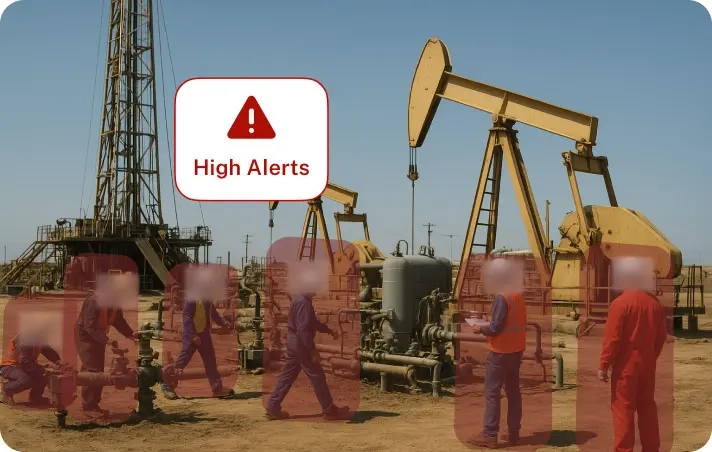
Walk into most industrial sites today and you’ll notice something different: cameras aren’t just recording anymore, they’re actively watching for safety issues as they happen.
AI-powered vision systems can spot someone missing their hard hat or working at an unsafe angle instantly, and behavior-monitoring tools flag risky patterns before accidents occur.
What’s changing the game isn’t just the technology itself, but what comes after, the data these systems capture is helping teams understand exactly where and why incidents happen, which lets them build real safety cultures instead of just enforcing rules
Below, we’ve identified 11 innovative behavior-based safety solutions that are changing how organizations actually protect their people, from real-time hazard detection to the data systems that help teams build lasting safety cultures
1. Observia AI
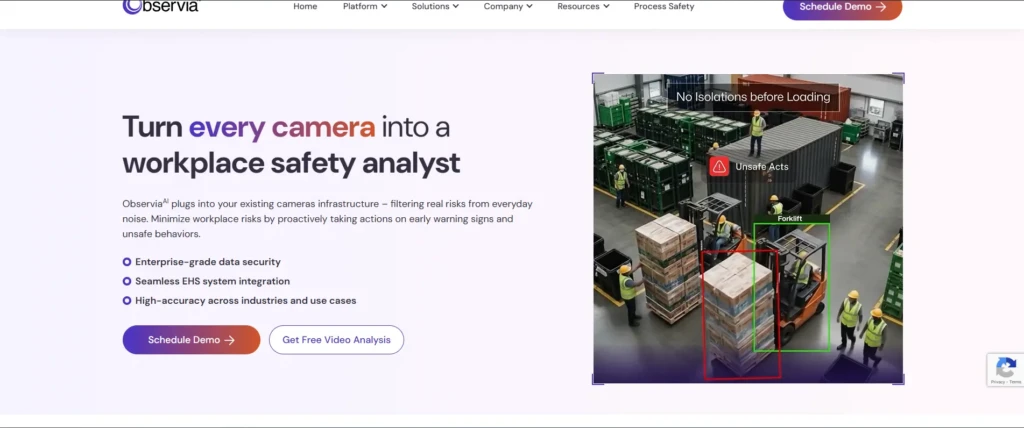
Observia merges AI-powered observations with EHS platform records, creating a unified dashboard of workplace risks. The platform stands out by working seamlessly with existing CCTV infrastructure without requiring hardware upgrades.
The AI analyzes behavior and movement, recognizing potential hazards before they escalate across multiple industries including manufacturing, construction, logistics, and food production.
What makes Observia particularly compelling is its privacy-first approach that treats cameras as safety sensors rather than surveillance tools, using skeletal tracking or key point detection to protect worker privacy while maintaining vigilant safety oversight.
Try Our Newly Launched OSHA DART Calculator
Instantly calculate your DART rate and understand your safety metrics
2. Intenseye

Intenseye provides a platform that offers visibility into workplace hazards, conducts ergonomic assessments, and monitors compliance and safety equipment.
The platform leverages existing camera infrastructure to detect hazards like PPE violations, unsafe conditions, and near-miss incidents with particular strength in manufacturing and warehousing. Intenseye integrates with existing CCTV systems, using computer vision technology to detect unsafe behaviors and events in various enterprise environments, making it accessible to organizations at all stages of their safety journey.
3. Voxel

Voxel, with its $12 million funding in 2023, integrates with existing security cameras for real-time alerts. The platform enables detection of slip, trip, and fall hazards, among the leading drivers of general liability claims.
Voxel transforms existing security cameras into intelligent safety monitors, helping organizations reduce workers’ compensation costs that can consume approximately 10% of payroll in high-risk industries. The system provides customizable alerts and trend analysis to drive continuous safety improvement.
4. ViAct

viAct is a workplace safety platform that uses computer vision AI to reveal unseen hazards, improve compliance, and empower EHS leaders to save lives. The platform offers over 100 AI modules covering diverse hazard detection scenarios.
It continuously monitors workplace activities, detecting safety violations, PPE compliance, near misses, and hazardous behaviors in real time, with advanced capabilities for confined space monitoring, lone worker protection, and specialized industry applications including mining, oil and gas, and construction.
5. Chooch AI
Chooch AI Vision monitors camera video feeds in real-time to track movements and behaviors and communicate faster about potential safety risks. The platform excels at detecting falls, PPE violations, restricted zone breaches, ergonomic risks, and vehicle-operator safety.
Chooch can deploy on cameras and edge devices, in the cloud, or hybrid environments, making use of existing cameras and network technology with no other sensors or hardware required.
6. Visionify
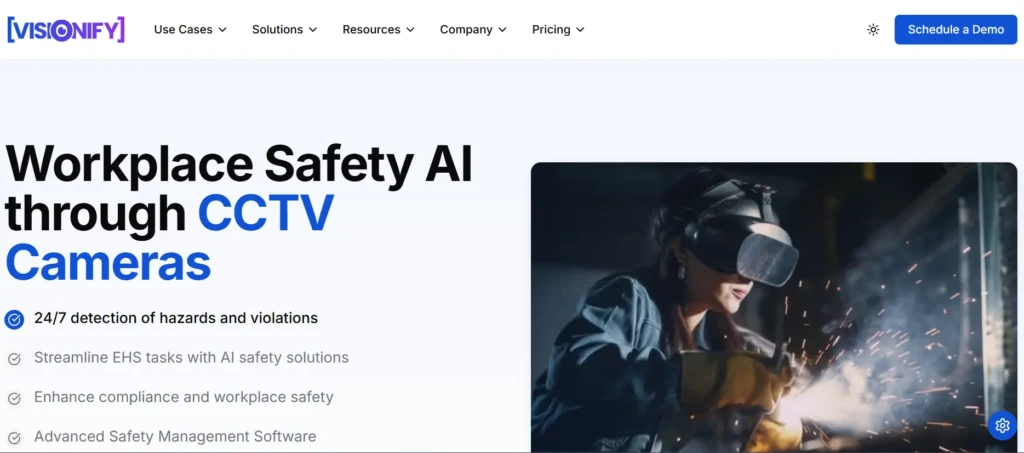
Visionify delivers AI-driven workplace safety solutions aimed at enhancing safety and compliance in manufacturing, warehousing, and industrial environments. Visionify specializes in real-time visual intelligence for workplace safety, combining edge computing with cloud analytics.
The platform processes video locally on edge devices for immediate hazard detection while maintaining centralized reporting, addressing privacy concerns by limiting data transmission.
7. Protex AI
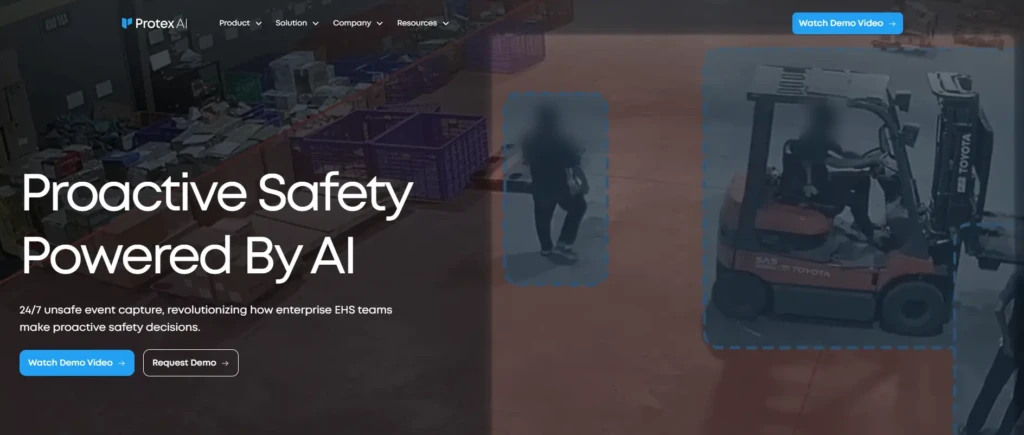
Protex AI focuses on AI workplace safety solutions within the industrial safety management sector, providing a platform that integrates with existing CCTV systems, using computer vision technology to detect unsafe behaviors and events.
The solution excels at autonomously capturing safety events customized to specific work environments through 24/7 monitoring. Protex provides 24/7 auditing of CCTV footage to identify non-compliant events for evidence-based reporting.
8. BuddyWise
Buddywise operates as a software company that focuses on workplace safety through technology in the safety and security sector, offering risk detection and safety monitoring solutions using computer vision and machine learning.
Buddywise provides peer-to-peer safety monitoring and collaborative hazard detection, emphasizing worker engagement and culture-driven safety improvement. The platform’s human-centered approach builds a safety culture beyond pure compliance.
9. Leela AI
Leela Platform is AI workplace safety software offering workforce safety management solutions to identify hot zones, workplace hazards, and ergonomic issues.
Built on breakthrough MIT AI research, Leela Platform combines visual sensors with AI algorithms to provide continuous time and motion studies, can identify safety, PPE, and ergonomic hazards, and capture best practices for use in training.
The system rapidly deploys with minimal training data requirements compared to conventional machine learning approaches.
10. Arvist
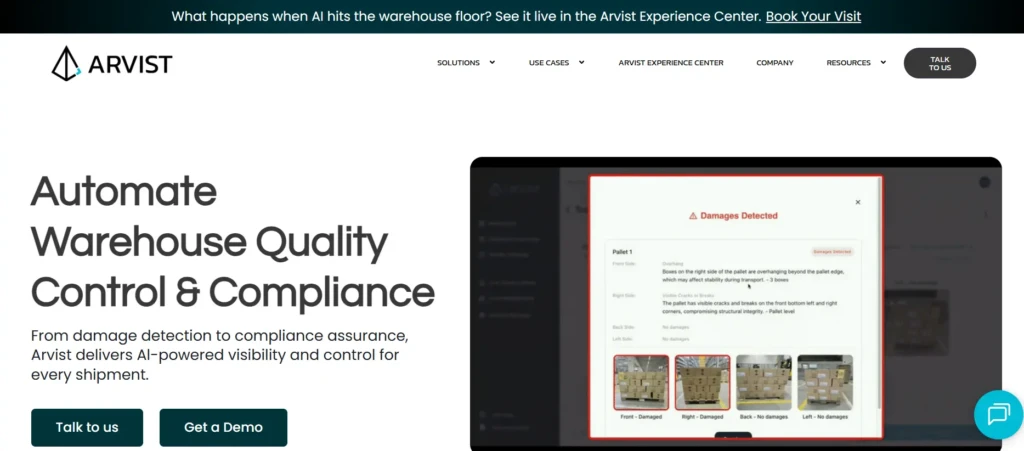
Arvist’s AI-powered solution continuously scans camera feeds, identifying potential safety incidents including PPE violations, obstructions and hazards, unauthorized access, and after-hours activity detection.
Originally specialized for warehouse operations, Arvist connects to existing cameras and/or sensors to detect near-misses and incidents in real-time. The platform automates safety data gathering, eliminating manual collection while providing comprehensive EHS oversight.
11. Surveily
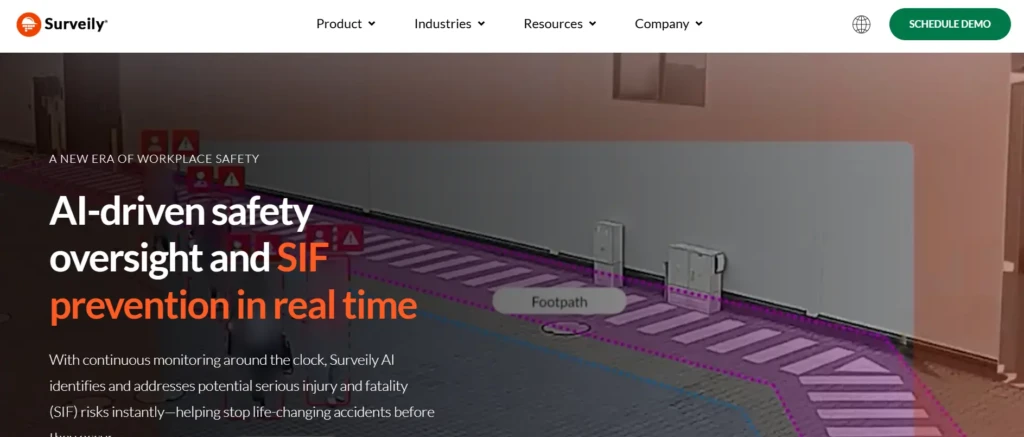
Surveily is a company focused on enhancing workplace safety through AI-powered monitoring and risk prediction, offering a platform that transforms existing camera systems into proactive, 24/7 safety monitoring solutions.
The system provides instant insights and enables early identification of potential hazards, making it particularly valuable for organizations with stringent safety and privacy requirements.
Key Capabilities Across Leading Platforms
Modern behavior-based safety software typically includes real-time hazard detection powered by computer vision, PPE compliance monitoring, ergonomic risk identification, near-miss detection and documentation, immediate alert capabilities to relevant personnel, integration with existing EHS management systems, comprehensive reporting and trend analysis, and customizable monitoring zones specific to facility layouts.
The most effective solutions balance technological sophistication with worker privacy protection, offering options for facial blurring, data anonymization, and on-premises deployment.
Implementation Considerations
Organizations selecting a behavior-based safety platform should evaluate hardware compatibility with existing camera infrastructure, deployment timeline (most modern solutions launch within days to weeks), customization capabilities to match specific hazard profiles, privacy and data governance features, integration compatibility with existing EHS and enterprise systems, and the breadth of detectable hazards within their specific industry.
The Behavior-Based Safety Future
Behavior-based safety software represents a fundamental shift from reactive incident response to predictive risk management. By making unsafe behaviors immediately visible to safety teams and creating quantifiable records of compliance, these platforms empower organizations to address root causes before incidents occur.
The industry continues to evolve rapidly, with advances in edge computing, privacy-preserving AI, and automation enabling organizations of all sizes to implement enterprise-grade safety monitoring tailored to their operational realities.