
 Observia Editorial Team
Few concepts have shaped workplace safety as profoundly as the Heinrich triangle. Also called the Heinrich safety triangle, accident triangle, or Heinrich triangle theory, this classic model has guided safety thinking for nearly a century – and it still shapes how modern tools like computer vision AI prevent injuries before they occur.
Its staying power comes from one essential idea:
Serious injuries rarely happen out of nowhere. They are almost always preceded by minor incidents, near-misses, and unsafe conditions.
The Heinrich triangle safety model teaches us that if we want fewer catastrophic injuries, we must pay attention to the warning signs at the base of the pyramid. And with today’s real-time AI systems those warning signs are more visible than ever.
What Is the Heinrich Triangle?
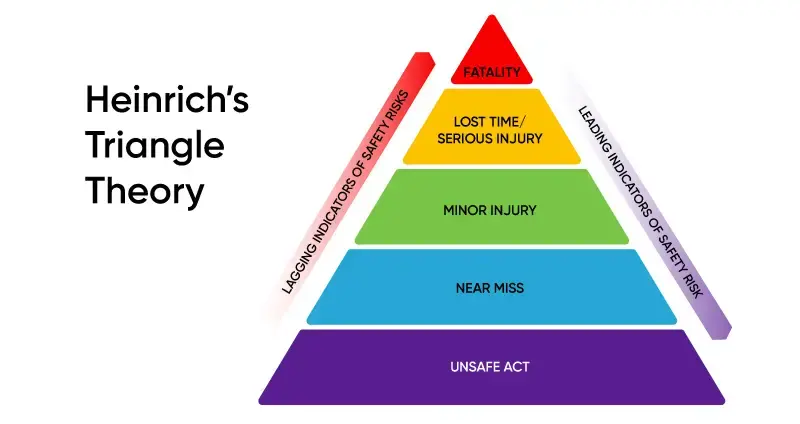
The Heinrich triangle visually represents the relationship between severe injuries, minor injuries, and near-misses. Imagine a pyramid:
- Top: Serious injuries and fatalities
- Middle: Minor injuries
- Base: Near-misses and unsafe conditions
Heinrich’s original safety ratio proposed:
1 major injury : 29 minor injuries : 300 near-misses
These numbers aren’t meant to be mathematically exact across all industries, but the pattern is consistent:
serious incidents have precursors – and those precursors are detectable.
Even though these exact numbers are debated today, the underlying pattern remains:
address the base of the triangle, and you reduce the chances of incidents at the top.
This is why the Heinrich triangle safety model became foundational in safety management – it reframed prevention from reactive to proactive.
Where Did the Heinrich Triangle Theory Come From?
Herbert William Heinrich, an insurance investigator at Travelers Insurance, introduced the theory in 1931. He analyzed more than 75,000 industrial accident reports, uncovering patterns in how injuries occurred and what preceded them.
Heinrich’s two groundbreaking conclusions were:
- Accidents follow predictable ratios (the famous triangle).
- Unsafe acts accounted for 88% of injuries, an idea heavily debated today.
While the second point has since been softened by modern safety science, the first insight – that small events predict major ones – remains the backbone of proactive safety programs.
And thanks to computer vision systems that detect unsafe conditions automatically, the Heinrich accident triangle is more actionable today than it ever was in Heinrich’s time.
Suggested Read: Computer Vision in Manufacturing: The Layer of Safety Most Factories Are Missing
The Heinrich Safety Triangle Explained
The Heinrich triangle theory categorizes incidents into three layers:
1. Serious Injuries & Fatalities (Top)
These incidents are rare but life-altering. Examples include:
- Falls from height
- Crush or entanglement injuries
- Severe chemical exposure
- Machine-related fatalities
- The Heinrich accident triangle teaches that these incidents usually have clear precursors – if an organization has the tools to detect them.
2. Minor Injuries (Middle)
These include:
- Cuts that require stitches
- Burns that need treatment
- Sprains requiring medical attention
They are less severe but far more frequent. Heinrich estimated that 29 minor injuries occur for every major one
They are the middle indicators – signals that something in the environment, workflow, or training is breaking down.
3. Near-Misses & Unsafe Conditions (Base)
This is the foundation of the pyramid – and the most powerful layer for prevention.
Examples include:
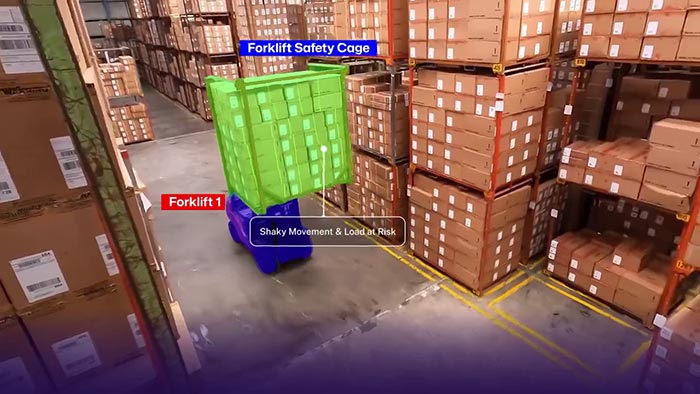
- A forklift missing a pedestrian by seconds
- A worker slipping but catching themselves
- Tools dropping but landing safely
- A machine operating too close to a worker
Heinrich’s original ratio suggested 300 near-misses precede one major injury.
These 300 “invisible” events are the foundation of the Heinrich accident triangle – and the biggest opportunity for intervention.
Most organizations dramatically underreport near-misses, meaning the base of the triangle is often much larger than anyone realizes.
Frank Bird’s Expansion of the Heinrich Accident Triangle
In 1966, Frank E. Bird Jr. expanded Heinrich’s work after analyzing 1.7 million incident reports across 297 companies.
His refined ratio was:
1 serious injury : 10 minor injuries : 30 property-damage incidents : 600 near-misses
Bird also introduced a foundational layer beneath the triangle:
unsafe acts and unsafe conditions – the root causes.
Bird’s refinement is widely used today because it emphasizes:
- Property damage as an early warning layer
- Systemic issues beneath incidents
- Even stronger correlation between near-misses and serious events
It adds depth to the Heinrich safety triangle while keeping the core idea intact
Does the Heinrich Triangle Still Hold Up?
Though the Heinrich triangle theory was introduced nearly 100 years ago, modern research continues to validate its central idea – with some nuance.
Modern Research Supporting the Triangle
A major 2018 NIOSH study analyzing 27,000 establishments over 13 years found:
- Lower-severity events can predict the likelihood of fatalities
- The correlation is strongest when “severity” uses lost workdays as the metric
- Patterns within the same environment are highly predictive
These modern validations don’t confirm Heinrich’s exact numbers, but they do support the underlying relationship that fuels the Heinrich accident triangle.
Limitations of the Heinrich Triangle Theory
Despite its strengths, critics highlight key limitations:
1. Ratios vary by industry.
Construction, warehousing, chemical plants, and healthcare all have different risk profiles. The triangle should guide thinking – not dictate exact numbers.
2. It may overemphasize frequent, minor incidents.
A reduction in slips and trips doesn’t necessarily reduce catastrophic risks like explosions or structural failures.
3. It historically blamed workers.
Modern safety science recognizes that systems, not individuals, cause most accidents.
4. Near-miss reporting is unreliable.
Without technology, organizations see only a fraction of near-misses.
This is exactly why many safety teams now turn to safety AI systems like Observia, Intenseye and Voxel – to automatically detect the micro-events that would otherwise go unreported.
How to Apply the Heinrich Triangle in Modern Safety Program
Used correctly, the Heinrich triangle safety model remains incredibly effective – especially when paired with technology.
1. Build a Strong Near-Miss Reporting Culture
Encourage reporting by:
- Making it anonymous
- Removing blame
- Celebrating hazard reporting
- Showing how reports lead to action
But manual reporting alone still misses most near-misses.
2. Investigate Root Causes, Not Symptoms
If someone nearly slips, the fix is not “pay more attention.”
It’s:
- Why was the floor slippery?
- Why wasn’t it cleaned sooner?
- Are workflows creating recurring hazards?
This aligns with modern safety science and moves beyond Heinrich’s original worker-focused explanation.
3. Use Data & Analytics to Identify Trends
Software platforms – especially AI-based systems – let teams:
- Track near-misses in real time
- Identify hotspots
- Detect recurring hazardous behaviors
- Predict risks before injuries occur
This brings the Heinrich triangle theory into the big-data age.
4. Balance High-Frequency & High-Severity Risks
Use the pyramid to reduce common minor injuries.
But also apply:
- HAZOP
- Bow-tie analysis
- Reliability engineering
This ensures catastrophic risks aren’t overlooked.
5. Engineer Out Hazards When Possible
Modern safety focuses on system improvement:
- Better machine guarding
- Process redesign
- Ergonomic changes
- Automation where feasible
How the Heinrich Triangle Shows Up Across Industries
The Heinrich safety triangle adapts differently across sectors:
Manufacturing
High visibility into machine-related near-misses and forklift interactions supports proactive prevention.
Construction
Constantly shifting hazards make near-miss detection even more critical.
Healthcare
Needle-stick near-misses and patient-handling risks follow recognizable patterns – but are highly underreported.
Warehousing & Logistics
Forklift near-misses, congestion, blind spots, and ergonomic risks align perfectly with the pyramid.
Complementary Safety Frameworks
The Heinrich triangle works best when paired with:
- Hierarchy of Controls
- Behavior-Based Safety (BBS)
- Safety culture assessments
- Proactive audits & risk assessments
These strengthen the model where it falls short, especially around catastrophic risks.
Key Metrics to Track When Applying the Heinrich Triangle
Organizations that use the Heinrich triangle theory effectively track:
- Near-miss reporting rate
- Corrective action resolution time
- Training participation
- Hazard assessments completed
- Total recordable incident rate (TRIR)
- Lost workday rate
These metrics ensure that improvements at the base of the Heinrich safety triangle translate into fewer major injuries.
How Observia Brings the Heinrich Triangle to Life
This is where theory meets reality.
The biggest limitation of the Heinrich accident triangle has always been the invisibility of the base – the hundreds of near-misses no one sees.
Observia solves this.
Using computer vision and AI, Observia automatically detects:
- Near-misses
- Unsafe forklift interactions
- PPE non-compliance
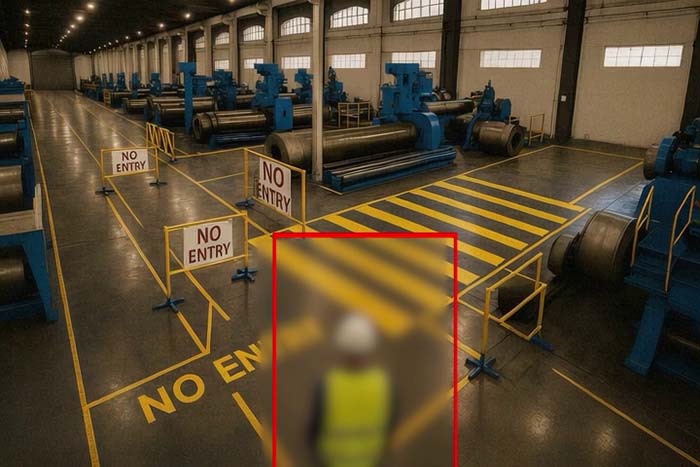
- Restricted-area breaches
- Unsafe climbing
- Poor ergonomics
- Congestion build-ups
In real time.
Without human monitoring.
Without waiting for paperwork.
This makes the entire pyramid visible, something Heinrich could never achieve with 1930s reporting systems.
The Enduring Legacy of the Heinrich Triangle – And Why It Matters More Today
Nearly a century later, the Heinrich triangle remains foundational because its core insight is timeless:
Major injuries don’t appear suddenly – they grow from patterns we can identify and fix.
Observia empowers organizations to see those patterns earlier, respond faster, and prevent injuries more effectively than ever before.
The next time someone says,
“It was just a near-miss – no harm done,”
remember the pyramid.
That near-miss may be the only warning you get.
Observia ensures you never miss it.