 Observia Editorial Team
Your safety team walks the facility daily. They inspect equipment. They check checklists. They wait for incident reports to arrive, sometimes days later. And by then, the damage is done.
The Problem: Timing
The issue isn’t effort. It’s timing. Safety professionals know what needs to happen. Workers know the rules. But somewhere between intention and reality, gaps appear. Someone rushes past a wet floor. Another worker adjusts equipment without proper PPE. A forklift edges too close to a pedestrian zone.
These aren’t disasters in progress. They’re patterns waiting to compound.
What if your safety team could see these patterns as they unfold, not after someone gets hurt?
The Hidden Cost of Detection Delays
30:1 Safety Pyramid Ratio For every serious injury, there are roughly 30 near-misses and 300 unsafe conditions. Most hazards never escalate because workers get lucky or supervisors catch them first.
Recommended Read – The Heinrich Triangle: Understanding Workplace Safety’s Most Influential Theory
DaysTraditional Response Time From incident occurrence to investigation to corrective action. During this lag, the same unsafe behavior has likely already repeated across your facility.
LuckYour Current Prevention Strategy The real cost isn’t just catastrophic incidents. It’s the accumulated impact of preventable patterns: recurring PPE violations, housekeeping lapses, and normalized shortcuts.
Management can’t invest in controls without data about where to focus. Supervisors miss patterns in the noise of daily operations. Workers see unsafe behavior as normal.
Real-Time Visibility Changes Everything
What happens when your safety team gets visibility into patterns as they happen?
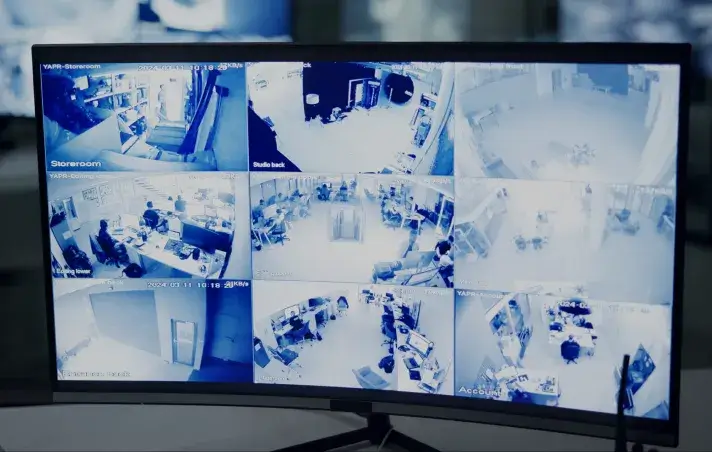
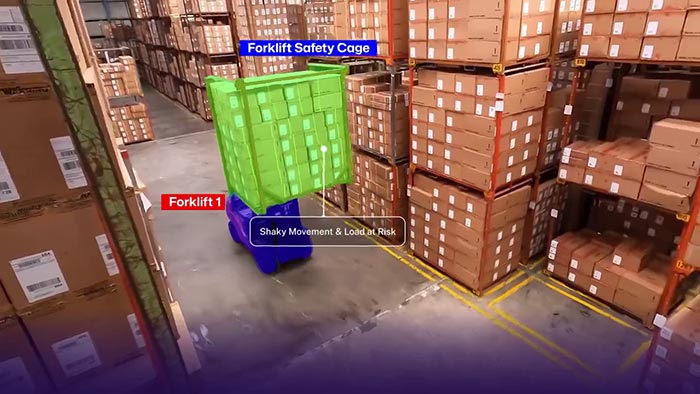
Observia.ai uses computer vision to monitor your facility continuously. It detects unsafe acts and unsafe conditions in real-time, not by adding burden to your team, but by automating what manual monitoring could never catch at scale.
How Real-Time Detection Works with Observia
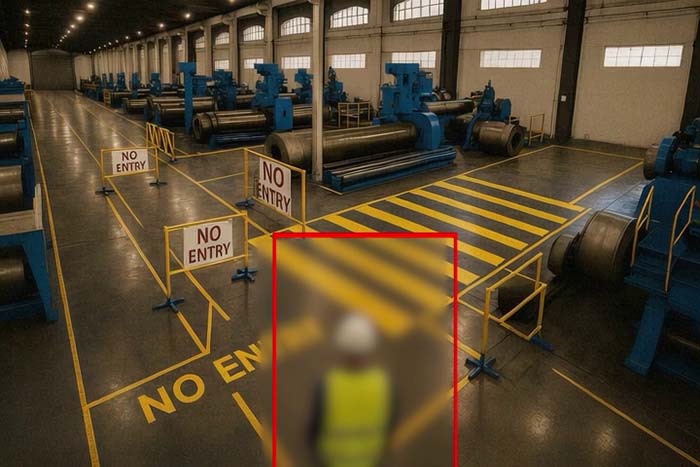
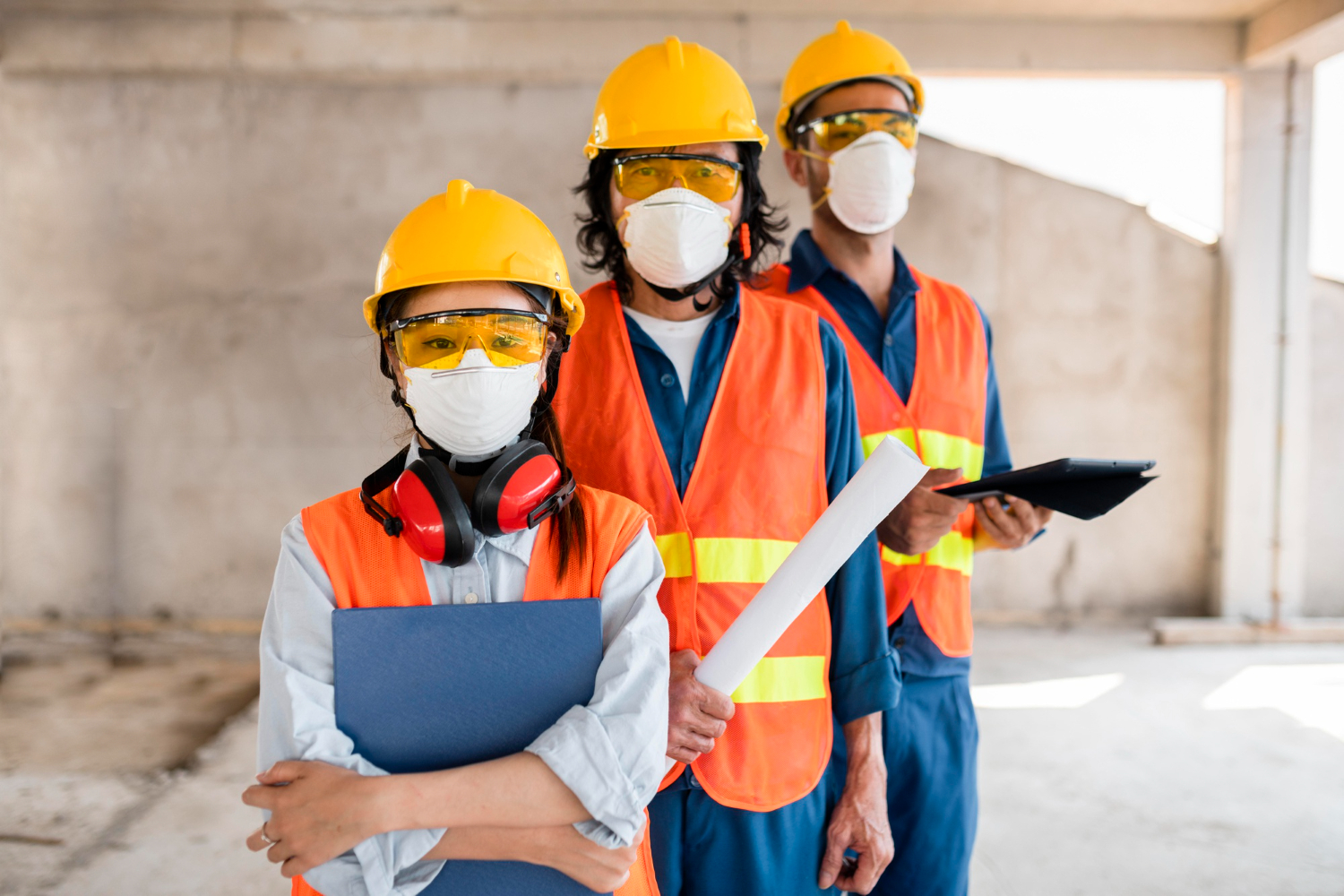
- Worker enters restricted hazard zone without proper PPE → Alert triggered immediately
- Clutter accumulates near an exit → Notification before it becomes an evacuation obstruction
- Forklift approaches pedestrian area at unsafe speed → Operators and supervisors see violation in real-time
- Missing safety equipment detected → Corrective action initiated before exposure occurs
- Unsafe climbing posture identified → Worker alerted before fall risk materializes
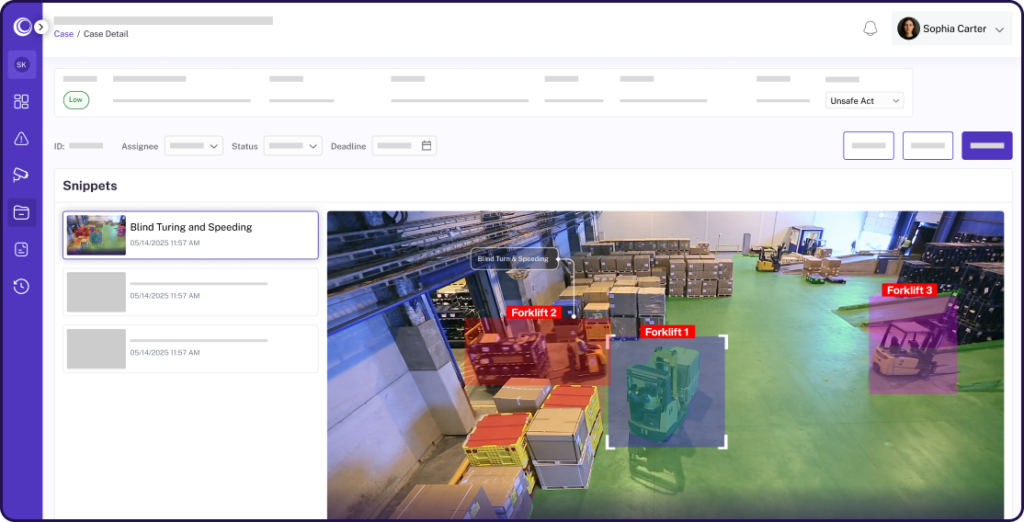
This isn’t surveillance theater. It’s hazard detection with one specific purpose: give your safety team the information they need to prevent incidents before workers are harmed.
Real-World Result
One Warehouse Team, 38% Compliance Improvement in months
They didn’t change their safety policies. They didn’t hire additional supervisors. They gained visibility into where violations were actually occurring and when, enabling immediate corrective action instead of waiting for incident patterns to emerge through reporting. That’s the difference between reacting to safety problems and preventing them.
Beyond Detection: Pattern Recognition at Scale
The most valuable part of real-time monitoring isn’t individual alerts. It’s the patterns that emerge from aggregated data.
Your facility generates hundreds of safety observations daily. Most monitoring systems drown you in noise, false positives, irrelevant alerts, data that doesn’t translate into action.
Observia.ai focuses on what matters: actual hazards and the behaviors that create them.
Hazard Clustering
Analytics show where near-misses cluster geographically, revealing systemic design or operational issues.
Persistent Issues
Identify which areas have chronic housekeeping problems or recurring safety lapses requiring systematic intervention.
Team Insights
Spot which workers or teams need targeted training based on actual violation frequency and patterns.
Equipment Risks
Identify equipment that consistently creates unsafe conditions, prioritizing upgrades and maintenance by impact.
With this clarity, your safety investments become strategic. You can direct training to high-risk areas. You can redesign workflows where unsafe behavior is endemic. You can prioritize equipment upgrades based on actual hazard frequency, not speculation. You’re no longer managing safety by intuition—you’re managing it by evidence.
The Ergonomics Advantage: Preventing Slow-Burn Injuries
Most facilities track dramatic incidents, falls, equipment failures, collisions. They miss the slow-burn injuries that cost them billions annually: musculoskeletal disorders from poor posture, repetitive motion injuries, strain from improper lifting.
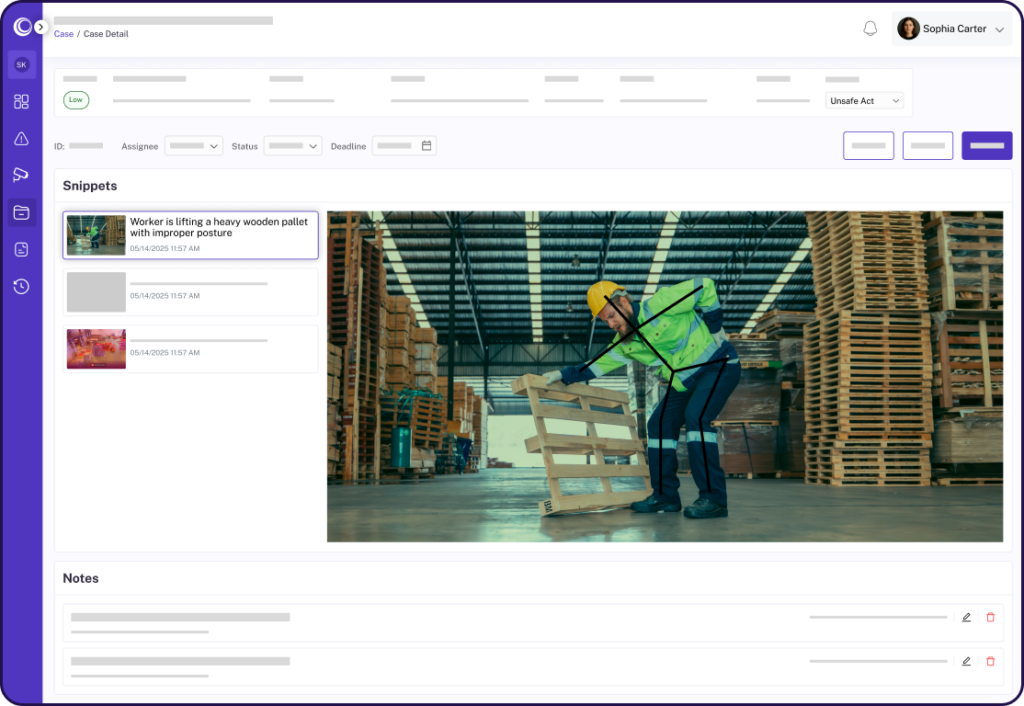
Observia.ai’s ergonomics module analyzes worker posture and lifting techniques using REBA (Rapid Entire Body Assessment) and Snook table data. The system identifies risky movements early, before workers develop chronic pain or permanent injury.
This isn’t about policing workers. It’s about redesigning work to fit human capability. When analytics show that a particular assembly task creates consistent postural strain, you can redesign the workstation, rotate workers differently, or add equipment that reduces force requirements. You’re preventing injuries by engineering them out of the process, not by hoping workers will self-correct.
Implementation Timeline
1 Initial Assessment (Hours)
You probably have cameras already. Observia.ai integrates with standard CCTV systems, IP cameras, and most major brands. No new infrastructure required.
2 Configuration (Hours to Days)
Basic scenarios configure in hours. You define which hazards to monitor, set alert thresholds, and assign notification recipients.
3 Complex Deployment (1-2 Weeks)
Multi-model deployments with advanced scenarios take 1-2 weeks with IT support. You’re augmenting your team’s capabilities, not replacing them.
4 Continuous Improvement (Ongoing)
Real-time alerts start preventing incidents immediately. Analytics reveal patterns. Your safety investments become progressively more strategic.
The Culture Shift Nobody Talks About
Here’s what happens when safety becomes visible and data-driven:
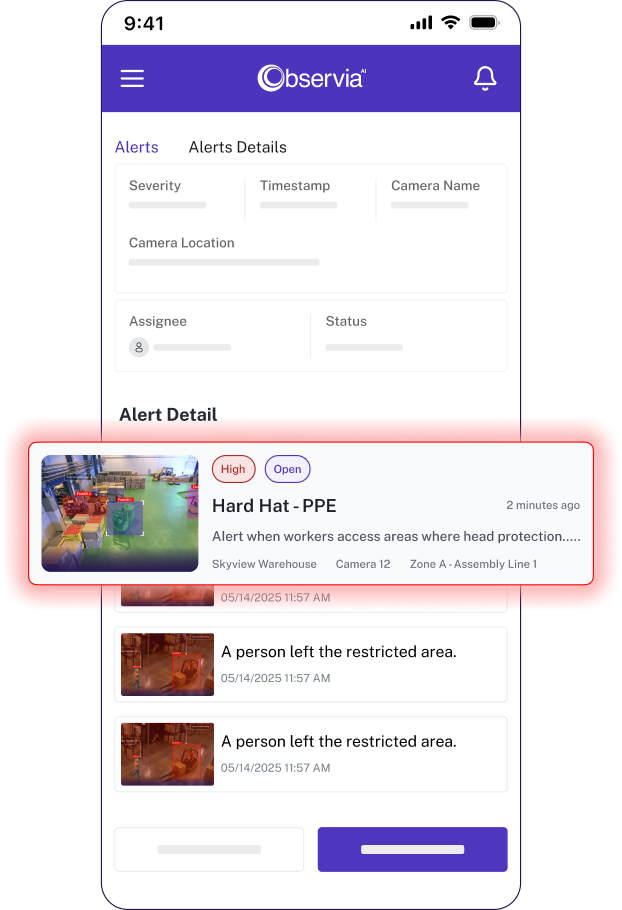
Workers see that safety isn’t just something management talks about. It’s something they measure and care about. Supervisors get objective information instead of relying on memory or instinct. Leadership can point to concrete metrics showing safety investment is working.
This builds what researchers call psychological safety, the sense that reporting hazards won’t result in punishment, and that the organization genuinely prioritizes worker wellbeing over convenience.
When workers see real-time monitoring preventing incidents rather than just documenting violations, they engage differently with safety. They stop viewing it as compliance theater and start seeing it as collective protection.
The best safety cultures aren’t built through fear. They’re built through visible, consistent commitment to prevention. Real-time hazard detection is one of the most credible ways to demonstrate that commitment.
OSHA Compliance Becomes a Byproduct
Nobody wants to spend resources on compliance just for compliance’s sake. But OSHA fines are real. The average serious violation fine exceeds $10,000. Repeated violations compound the cost.
The irony is that most fines are preventable. They occur because hazards existed, workers were exposed, and the company didn’t demonstrate diligent effort to identify and correct the conditions. When your safety program generates documented evidence of continuous monitoring, immediate alerts, and systematic corrective actions, you’re building a case that demonstrates due diligence.
Observia.ai maintains audit trails automatically. Every detection is logged with timestamp and location. Every corrective action is tracked to completion. This evidence isn’t just good practice, it’s OSHA-grade documentation that proves your program works.
The Question Isn’t Whether to Monitor- It’s How to Do It Right
Safety isn’t theoretical anymore. It’s operational. Every facility has cameras, data systems, and the ability to detect hazards in real-time. The question is whether you’re using these tools to prevent incidents or just to document what went wrong after the fact.
Most incidents start as patterns. The question is when you see them.