
 Observia Editorial Team
AI-powered near miss detection systems are revolutionizing workplace safety by catching incidents traditional reporting misses entirely. Work-related musculoskeletal disorders remain one of the most common sources of lost-time injuries in industrial and warehouse environments, accounting for about 30% of all such cases in private industry.
These disorders impose a heavy economic burden: direct workers’ compensation costs for MSDs alone have been estimated between US$13 billion and US$20 billion annually in the U.S., and total economic costs – including lost productivity, medical expenses, and indirect costs – may exceed US$45 – 54 billion a year.
Manual reporting consistently undercounts both injuries and near-misses, because it relies on workers to remember and report events – a process shown to miss many incidents.
By contrast, automated detection systems using sensors, cameras, and AI can continuously monitor operations, detect unsafe postures and risky manual handling, and surface near-misses that would otherwise go unnoticed.
If you’re serious about building a proactive safety culture, you need a system that doesn’t wait for injuries to happen – one that sees, captures, and helps prevent them before they can cause real harm.
What Are AI-Powered Near Miss Detection Systems?
AI-powered near miss detection systems use artificial intelligence, computer vision, and machine learning to continuously monitor workplaces for close-call events that could have resulted in injury or property damage but didn’t – this time. Unlike traditional safety programs that depend on workers manually reporting near misses after the fact, these intelligent systems automatically detect, document, and alert safety teams to dangerous situations as they unfold.
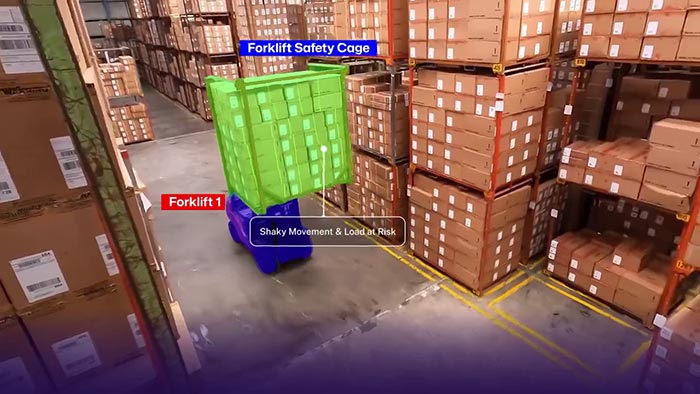
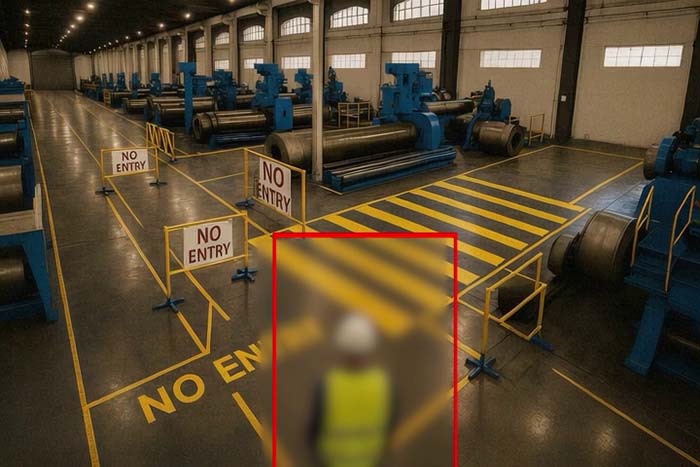
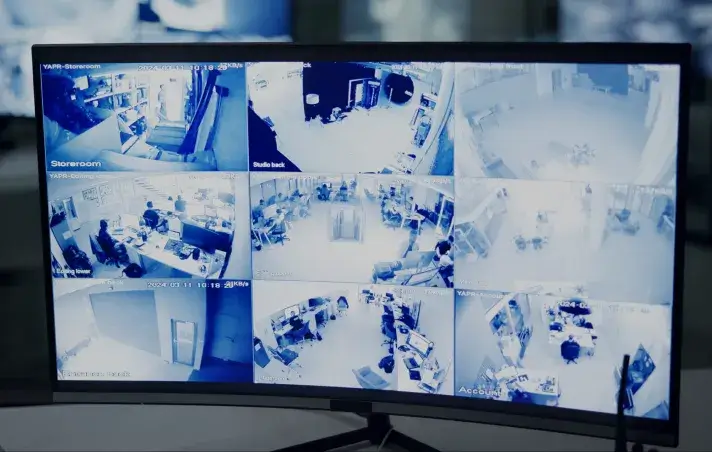
These systems analyze video feeds from existing CCTV or IP cameras, using advanced algorithms to identify risky behaviors and hazardous interactions in real time. They can detect scenarios like workers narrowly avoiding collisions with moving machinery, pedestrians stepping into vehicle paths, unsafe reactions near heavy equipment, sudden evasive movements indicating loss of control, and workers entering restricted zones without proper authorization.
The goal is straightforward: capture every near miss automatically, provide immediate alerts so corrective action can be taken instantly, and build a comprehensive database of safety data that reveals patterns and trends before they result in serious incidents.
Why Near Miss Detection Matters for Workplace Safety
Near misses are symptoms of undiscovered safety concerns. They’re free lessons that reveal weaknesses in your safety systems before those weaknesses cause injuries, fatalities, or property damage.
Research consistently shows that near-miss incidents and workplace accidents share strikingly similar causal patterns. This means you can infer potential hazards from observed near-miss situations, providing an effective approach to proactive accident prevention rather than reactive incident response.
The challenge is that near misses are frequently left unreported and unrecorded, especially in high-pressure industries like construction, manufacturing, and logistics. Workers face time pressure, normalization of risk, fear of blame or punishment, and lack of convenient reporting tools. Even when reporting systems exist, they capture only a fraction of actual near-miss events.
This is where best AI-powered near miss detection systems transform safety management. They eliminate dependence on manual reporting, capture every close call with video evidence, provide objective, unbiased documentation, enable real-time intervention before situations escalate, and build comprehensive safety databases that drive continuous improvement.
Industries That Benefit Most from AI Near Miss Detection
While any workplace can benefit from automated near miss detection, certain industries see particularly dramatic improvements:
Construction: Construction sites are dynamic environments with constantly changing conditions, multiple contractors working simultaneously, heavy machinery operating near workers, and elevated work at heights. AI systems monitor for workers entering hazardous zones, unsafe equipment operation near personnel, potential falling object incidents, and scaffold or ladder instability.
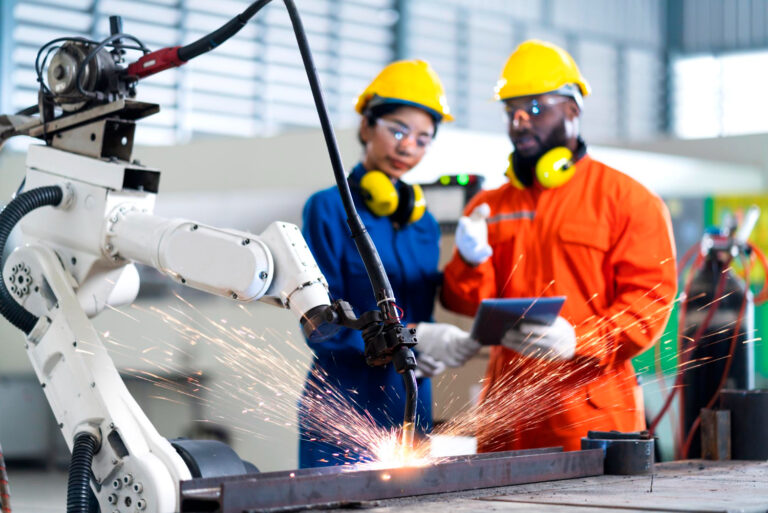
Manufacturing and Warehousing: Fast-paced assembly lines, robotic arms, conveyor systems, and forklift traffic create constant near-miss opportunities. Best AI-powered near miss detection systems identify human-machine proximity risks, workers reaching into dangerous zones, slip and fall precursors, and unsafe material handling practices.
Logistics and Distribution: High-traffic dispatch zones where forklifts, automated guided vehicles, and pedestrians overlap constantly. Near misses stem from narrow aisles, obstructed views, unexpected directional changes, and workers walking into vehicle paths.
Mining and Oil & Gas: Extreme spatial constraints with hydraulic lifts, offshore rigs handling equipment in tight walkways, and heavy machinery operating in confined spaces. AI detects unsafe movement during maintenance operations and rigging activities before close calls become casualties.
Ports and Terminals: Massive containers, mobile cranes, and straddle carriers create complex traffic patterns. Workers face near misses from swinging loads, blind spots around equipment, and walking into vehicle paths without proper signaling.
Comparison Table: AI-Powered Near Miss Detection Systems
AI-Powered Near Miss Detection Systems
Comprehensive Comparison of Leading Platforms
| System | Deployment | Real-Time Alerts | Privacy Focus | Primary Industry | Integration | Best Feature |
|---|---|---|---|---|---|---|
| Observia | On-Premises | Yes | High | Multi-Industry | Medium | Complete on-prem control |
| viAct | Cloud/Hybrid | Yes | Medium | Construction/Industrial | Low | 100+ scenario library |
| Viso Suite | Cloud/On-Prem | Yes | Medium | Fleet/Enterprise | Medium | Enterprise CV platform |
| Voxel | Cloud | Yes | Medium | Warehousing | Low | PIT-specific detection |
| VivaCity | Edge-AI | Yes | Very High | Transportation | Low | Privacy-preserving tech |
| Intenseye | Cloud | Yes | Medium | Manufacturing | Low | Existing camera transformation |
| Protex AI | Cloud/Hybrid | Yes | Medium | Industrial | Medium | Wearable integration |
| Safetymint | Cloud | Yes | Medium | Construction | Low | Behavioral analytics |
8 Best AI-Powered Near Miss Detection Systems
1. Observia Vision AI Safety Platform
Observia’s Vision AI platform leads the industry in comprehensive safety monitoring, combining near miss detection with broader workplace safety analytics to create a complete proactive safety ecosystem.
Key Features:
- Real-time computer vision for immediate near-miss identification
- On-premises deployment ensuring complete data privacy and control
- Integration with existing camera infrastructure with no hardware replacement
- Multi-site scalability with centralized management dashboard
- Behavioral analytics detecting patterns before they become incidents
- Customizable alert thresholds for different workplace environments
- Video evidence capture with automatic timestamping and geolocation
Best For: Organizations requiring integrated physical security and safety monitoring with on-premises data control, particularly those in construction, manufacturing, and logistics sectors where data privacy is paramount.
2. viAct Near Miss Detection
viAct specializes in AI video analytics for construction and industrial workplaces, offering a comprehensive library of over 100 scenario-based safety monitoring solutions including specialized near-miss detection.
Key Features:
- Detects unsafe human-machine interactions automatically
- Monitors worker behavior in high-risk zones continuously
- Identifies sudden evasive movements indicating loss of control
- Integration with existing CCTV and IP camera systems
- Scenario-based monitoring tailored to construction and manufacturing
- Centralized safety platform for faster reporting and analysis
Best For: Construction sites, manufacturing plants, and industrial facilities needing specialized scenario-based monitoring with rapid deployment capabilities.
3. Viso Suite Near Miss Detection
Viso Suite provides enterprise-wide computer vision transformation with specialized near-miss detection capabilities designed for fleet management and high-traffic industrial environments.
Key Features:
- Monitors distance between workers and heavy machinery automatically
- Detects risky vehicle interactions in real-time
- Captures every near-miss incident without bias or omission
- Continuous 24/7 monitoring with exceptional accuracy
- Learns from data to identify frequency patterns and risk hotspots
- Seamless integration with existing safety infrastructure
Best For: Enterprises with large fleets, warehouses with significant vehicle traffic, and organizations seeking comprehensive computer vision platforms beyond just near-miss detection.
4. Voxel Near Miss Detection
Voxel’s platform specializes in powered industrial truck (PIT) safety, focusing on preventing collisions between forklifts, other vehicles, and pedestrians in warehouse and distribution environments.
Key Features:
- Detects moving PITs getting too close to other equipment or people
- Configurable distance thresholds customized to site needs
- Alerting mechanism sends notifications within 60 seconds
- Detailed incident reports with timestamps and locations
- Historical data analysis for pattern identification
- Adjustable speed and distance thresholds for fine-tuning
Best For: Warehouses, distribution centers, and facilities with high forklift traffic requiring specialized PIT safety monitoring.
5. VivaCity Smart Road Safety and Near Miss Technology
VivaCity focuses on transportation safety, using AI-powered vision sensors to detect near misses between vehicles, pedestrians, and cyclists on roadways and in traffic environments.
Key Features:
- Estimates collision risks between different road users
- Edge-AI processing with privacy-preserving technology
- Automatic erasure of video without near-misses
- Face and license plate blurring for privacy compliance
- Heat maps and analytics for identifying dangerous intersections
- Transparent data usage with public signage explaining monitoring
Best For: Municipalities, transportation departments, and organizations managing roadways, parking areas, or campus traffic who need to identify collision hotspots before accidents occur.
6. Intenseye AI-Powered EHS Platform
Intenseye transforms existing security cameras into proactive safety systems, using computer vision to automatically detect unsafe acts and conditions including near-miss incidents across industrial environments.
Key Features:
- Automatic detection of slips, trips, and near-collisions
- Falls and fatigue monitoring with immediate warnings
- Real-time risk assessment and behavior analysis
- Detects equipment misuse and unsafe zone entry
- Integration with existing EHS management systems
- Continuous learning improving accuracy over time
Best For: Industrial facilities, manufacturing plants, and large enterprises seeking to transform existing camera infrastructure into intelligent safety monitoring without major capital investment.
7. Protex AI Workplace Safety Solution
Protex AI delivers real-time safety monitoring with specialized focus on preventing collisions between workers, vehicles, and equipment in industrial settings.
Key Features:
- Computer vision detecting proximity risks in real-time
- Wearable integration for worker location tracking
- Immediate alerts when unsafe distances are detected
- Analytics dashboard showing risk patterns and trends
- Customizable safety zones and alert parameters
- Compliance reporting for regulatory requirements
Best For: Industrial operations, logistics facilities, and construction sites where worker-vehicle interactions pose significant collision risks.
8. Safetymint AI Video Analytics
Safetymint provides AI-driven video analytics specifically designed for construction and industrial safety, with emphasis on detecting unsafe behaviors and near-miss incidents before they escalate.
Key Features:
- Automatic detection of PPE non-compliance
- Near-miss identification for multiple hazard categories
- Unsafe behavior recognition including improper tool usage
- Real-time alerts with video evidence capture
- Trend analysis identifying recurring safety issues
- Mobile app for on-site safety team notifications
Best For: Construction companies and industrial facilities prioritizing behavioral safety monitoring alongside near-miss detection for comprehensive risk management.
Key Features to Look for in AI Near Miss Detection Systems
When evaluating best AI-powered near miss detection systems for your organization, prioritize these essential capabilities:
Real-Time Detection and Alerting: The system must identify near misses as they happen and alert safety teams within seconds, not minutes or hours. Real-time intervention is what separates reactive from proactive safety programs.
Integration with Existing Infrastructure: Look for systems that work with your current cameras and surveillance setup. The best solutions require minimal hardware investment and integrate via standard streaming protocols.
Customizable Alert Thresholds: Different environments have different safety requirements. Your system should allow you to adjust distance thresholds, speed parameters, and risk levels based on your specific operational needs.
Video Evidence Capture: Automatic video recording of near-miss incidents provides objective documentation for investigation, training, and compliance purposes. Look for systems that capture events with timestamps and location metadata.
Pattern Recognition and Analytics: Beyond detecting individual incidents, the system should analyze accumulated data to identify trends, high-risk locations, dangerous times of day, and recurring behaviors that need correction.
Privacy Compliance: Especially important for public-facing environments or organizations with strict data privacy requirements. Edge-AI processing, automatic video deletion, and face-blurring features ensure compliance with privacy regulations.
Low False Positive Rates: AI that generates too many false alarms creates alert fatigue and undermines trust in the system. Advanced machine learning should distinguish between genuine risks and normal operations.
Scalability: Whether you’re starting with a single site or deploying across multiple facilities, the system should scale efficiently without proportional increases in complexity or cost.
How to Choose the Right System for Your Organization
Selecting the optimal AI-powered near miss detection system requires careful consideration of your specific needs:
Assess Your Primary Hazards: Construction sites face different risks than warehouses or transportation hubs. Choose a system with proven performance in your industry and specialized detection for your most critical hazards.
Evaluate Your Infrastructure: If you have extensive existing camera coverage, prioritize systems that integrate seamlessly without hardware replacement. If you’re building from scratch, consider platforms offering complete solutions.
Consider Data Privacy Requirements: Organizations in regulated industries or those handling sensitive data should prioritize on-premises deployment options like Observia that keep all data under your direct control.
Determine Your Integration Needs: Will the near-miss system work standalone or integrate with existing EHS management software, incident reporting platforms, or SIEM systems? Ensure compatibility with your current safety stack.
Calculate Total Cost of Ownership: Beyond licensing fees, consider implementation costs, training requirements, ongoing maintenance, and potential hardware investments. Cloud solutions may have lower upfront costs but higher recurring fees.
Test Before Committing: Request pilot programs or proof-of-concept deployments to validate that the system performs effectively in your actual environment before organization-wide rollout.
The Future of Workplace Safety Is Predictive
Reactive safety programs – responding after injuries occur – are expensive, damaging to morale, and fundamentally inadequate for modern workplace hazards. The organizations thriving today are those that embrace predictive safety powered by AI.
The evidence is clear: organizations implementing AI-powered near miss detection see reduced incident rates, lower workers’ compensation costs, improved safety culture and employee morale, faster identification of systemic safety issues, and better compliance with regulatory requirements.
If you’re looking for a comprehensive solution that combines best AI-powered near miss detection with broader workplace safety monitoring, Observia‘s Vision AI platform offers real-time detection with complete on-premises data control, seamlessly integrating with your existing infrastructure. Learn more about how Observia can transform your safety program from reactive to predictive at Observia.
The technology exists to prevent tomorrow’s accidents today. The only question is whether your organization will embrace it before the next close call becomes something worse.