
 Observia Editorial Team
Every year, approximately 2.6 million non-fatal workplace injuries occur in the United States, according to the Bureau of Labor Statistics. Yet most safety teams discover these incidents only after they happen. An injury-free workplace isn’t a destination, it’s a discipline. One that depends less on perfect compliance and more on seeing the patterns that precede incidents before they unfold.
A Target Zero Accident approach shifts safety from reactive incident management to proactive pattern recognition. It’s the difference between investigating what went wrong and preventing what’s about to go wrong.
The Problem With Your Current Safety Approach
You have safety procedures. Your teams have been trained. Inspections happen on schedule. Equipment is maintained. And still, incidents occur. This gap isn’t a failure of your program. It’s the reality of human work.
Consider what actually happens on your facility floor.
- A worker reaches for equipment from an awkward angle. Someone removes their hard hat for a few seconds because visibility is poor.
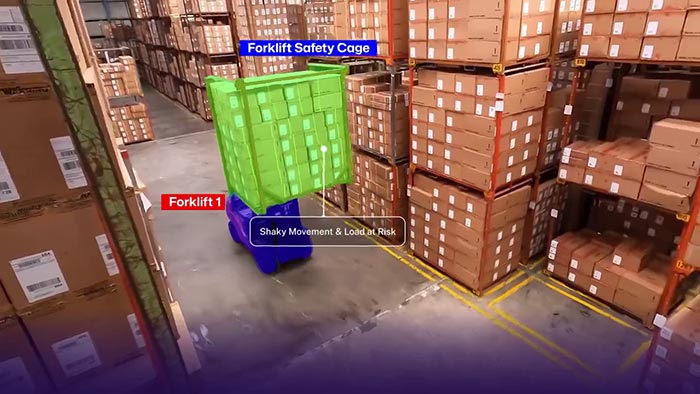
- A forklift operator rushes through a zone without the required checklist.
- A maintenance technician bypasses a guardrail to reach a control panel faster.
None of these moments are catastrophic by themselves. But they’re not random either.
These small unsafe acts compound over time.
According to research in occupational safety, approximately 88 percent of all workplace injuries result from unsafe acts rather than unsafe conditions.
More importantly, these unsafe acts follow patterns. The same worker in the same location during similar conditions tends to repeat the same behavior. A warehouse team reduced PPE non-compliance within 30 days when they could see where and when violations occurred most frequently, not by lecturing workers, but by addressing the root causes the data revealed.
Recommended Read – Understanding Near Misses, Unsafe Conditions, and Unsafe Acts: A Complete Guide to Workplace Safety Prevention
Your current safety model likely relies on incident reports, near-miss documentation, and periodic audits. These tools capture events after they’ve already happened.
By that time, the opportunity to prevent the injury has passed. An injury-free workplace requires a different approach: one where safety teams see unsafe patterns as they develop, not after someone gets hurt.
What Target Zero Accidents Actually Means
Target Zero is not about achieving perfection or eliminating risk entirely. That’s not realistic, and positioning it that way sets teams up to fail. Instead, Target Zero Accident strategies focus on dramatically reducing the frequency and severity of incidents by catching the behavioral patterns that lead to them.
Think of it this way.
In an injury-free workplace, the question isn’t “Will someone make a mistake?” The question is “When we see the pattern of mistakes, how quickly can we intervene?” This reframe is critical. It moves safety from blame to visibility. From shame to systems thinking.
The underlying principle is straightforward. Small behaviors compound over time. A worker who forgets their safety glasses once might be distracted.
A worker who forgets safety glasses five times in two weeks in the same location has a pattern.
The pattern reveals something: Is the task design forcing them to choose between speed and safety? Is lighting inadequate? Is PPE uncomfortable? Are they undertrained? The pattern points you toward the root cause.
An injury-free workplace doesn’t eliminate human error. It makes patterns visible so safety teams can address them before they result in harm.
This is fundamentally different from traditional safety culture initiatives, which depend on awareness and behavioral change across thousands of workers. Those programs are necessary, but they’re slow.
A Target Zero approach accelerates prevention by creating real-time visibility into when and where unsafe acts repeat.
The Cost of Missing Patterns
The financial impact of workplace injuries extends far beyond direct medical costs. The average cost of a serious workplace injury is significant. For a non-fatal injury resulting in lost work time, the median cost is approximately 45,000 dollars, according to Liberty Mutual’s Workplace Safety Index. But costs ripple further: lost productivity, increased insurance premiums, regulatory fines, employee turnover, and reputational damage.
More troubling is the human cost. An injury doesn’t just affect the injured worker. It affects their families, their team, and your organization’s safety culture.
When incidents happen frequently, even minor ones, workers begin to see injury as inevitable, a cost of the job. Safety becomes something that happens to them, not something they actively maintain.
Yet many organizations miss the patterns that precede serious injuries because they lack visibility into the smaller violations that happen every day.
A near-miss report might document that a worker entered a restricted zone without proper PPE once. But if that same worker enters the zone without PPE three times per week, and your safety team only knows about one incident, the pattern goes unseen.
This is where an injury-free workplace concept becomes essential. It forces the question: Are we seeing what’s actually happening, or only what’s reported?
Most safety leaders discover that they’re missing a significant portion of unsafe behavior simply because it’s invisible without real-time monitoring. Small unsafe acts happen constantly. But without visibility into their frequency and location, safety teams can’t intervene in the patterns, only in the outcomes.
How Patterns Create Prevention Opportunities
Let’s walk through a concrete example. A distribution facility with 200 employees was experiencing a steady stream of slip and trip incidents not catastrophic, but consistent.
The safety manager reviewed incident reports and saw that falls were happening across multiple areas. The instinct was to launch a facility-wide floor maintenance program and retrain workers on proper footwear.
But when they implemented a system to capture unsafe acts in real-time, the pattern became clear. Slip and trip incidents weren’t distributed evenly. They were concentrated in three specific areas during shift changes, when the facility was most congested. Moreover, the same workers were involved in multiple incidents, not because they were careless, but because they were rushing through congested zones to clock in and out.
The root cause wasn’t poor housekeeping or inadequate training. It was workflow design. By seeing the pattern, the facility made a simple operational change: they staggered shift changes to reduce congestion in high-traffic zones. Slip and trip incidents in those areas dropped by 60 percent within 60 days.
See Observia help Identify Blindspots
This is what Target Zero Accident strategies make possible. Not blame-driven safety. Pattern-driven safety. When you can see that PPE violations happen more frequently during certain tasks, you can redesign the task or retrain on that specific process.
When you see that unauthorized zone access happens during peak production hours, you can adjust workflow or add supervision during that window. When you identify that unsafe ladder positioning occurs in particular maintenance jobs, you can provide better tools or redesign the job.
An injury-free workplace becomes achievable because prevention targets the actual causes, not assumptions about causes.
Three Critical Elements of a Target Zero Approach
Building an injury-free workplace requires three interconnected elements. Each one depends on the others to create sustained results.
1. Visibility Into Unsafe Acts, Not Just Incidents
Most safety programs measure outcomes, incidents that resulted in injury, near-misses that were reported, audit findings. But outcomes are lagging indicators. They tell you what already happened. An injury-free workplace needs leading indicators: the unsafe acts themselves, documented with frequency and location data.
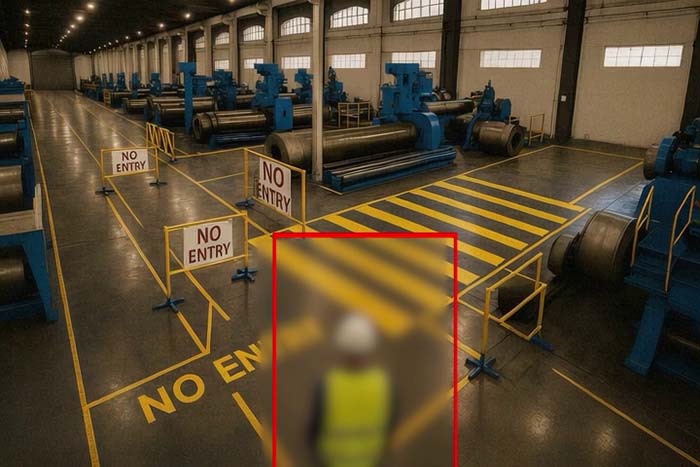
This means capturing when workers enter restricted zones without proper PPE. When they remove required safety equipment. When they use equipment unsafely. When they fail to follow lockout-tagout procedures. When they work at heights without harnesses. These aren’t catastrophic events being reported as incidents. They’re behavioral events happening every day. Without visibility into them, safety teams are working blind.
Safety teams see unsafe acts as they happen, without constant supervision. This visibility creates the foundation for all other prevention efforts. You can’t prevent patterns you can’t see.
2. Understanding Frequency and Location, Not Just Severity
Once you have visibility, the next step is understanding which unsafe acts matter most. A worker removing their hard hat for 10 seconds is different from a pattern where multiple workers remove hard hats in the same location because sun glare makes tasks difficult. The frequency of the behavior and its location reveal the underlying issue.
Most incidents start as patterns.
The question is when you see them. Safety leaders who understand frequency can prioritize interventions where they’ll have the most impact. Instead of generic retraining programs aimed at all workers, they can target specific crews in specific areas facing specific challenges. This is far more effective and efficient.
Frequency also reveals whether a behavior is a one-time lapse or a systemic issue. One worker forgetting PPE is a training gap.
Five workers consistently forgetting PPE in the same role is a design problem maybe the PPE is uncomfortable, the task setup doesn’t accommodate it well, or there’s a workflow issue forcing them to choose between speed and safety.
3. Rapid Intervention in Root Causes, Not Just Incidents
The final element is closing the loop between seeing patterns and taking action. In traditional safety models, corrective actions are slow. An incident happens, an investigation follows, and weeks or months later, changes are implemented. By then, the pattern has often produced another injury.
An injury-free workplace requires a different cadence. When patterns become visible, interventions can begin immediately. Safety teams can adjust work procedures, provide targeted retraining, redesign tasks, improve equipment, enhance supervision, or fix environmental issues, all before the next incident occurs.
This rapid intervention transforms safety from a reactive function to a proactive one. Instead of asking “What can we do after someone gets hurt?” safety teams ask “What can we do now to prevent the pattern from producing an injury?“
Real-World Application: What This Looks Like
Consider a mid-sized manufacturing facility with a metalworking operation. Workers are required to wear safety glasses, hard hats, hearing protection, and cut-resistant gloves while operating machinery. Despite regular training, PPE violations were a persistent issue.
Traditional corrective actions included additional training and disciplinary measures. These helped somewhat, but violations continued. When the facility implemented a pattern-focused approach, they discovered something unexpected. Violations weren’t evenly distributed. They were concentrated in one specific work cell, during one specific shift, on one specific type of job.
Deeper investigation revealed the root cause. The particular job required workers to hold materials with one hand and control equipment with the other, leaving no hands for adjusting slipping hearing protection or repositioning hard hats that shifted during work.
Rather than disciplining workers for unsafe behavior, the facility provided a simple solution: they modified the work fixture to clamp materials, freeing both hands. PPE compliance in that work cell increased to 95 percent within 14 days.
This is how an injury-free workplace differs fundamentally from a safety-compliance workplace. Compliance focuses on whether workers follow rules. An injury-free workplace focuses on whether the system allows workers to be safe while being productive.
Building Your Target Zero Strategy
Implementing a Target Zero Accident approach requires shifting how you collect, analyze, and act on safety data. Here are the practical steps.
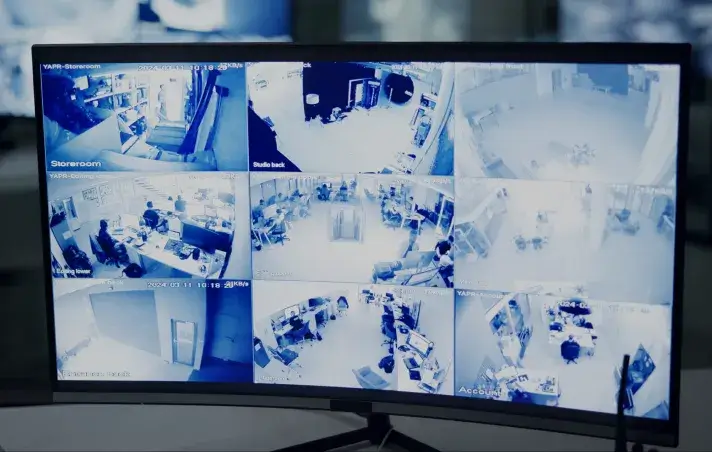
Establish real-time visibility into unsafe acts. You need to know when and where violations are occurring. This might mean enhanced supervision, more frequent audits, or technology solutions that provide automated monitoring. The goal is capturing the frequency and location of unsafe behaviors, not relying on incident reports or periodic audits.
Analyze patterns, not just incidents. When data arrives, look for clusters. Are certain unsafe acts happening repeatedly in specific locations? During particular shifts? By specific worker groups or roles? The patterns will reveal root causes that individual incidents won’t.
Prioritize interventions by impact and effort. Not all patterns warrant the same response. A pattern affecting 20 workers in a high-risk task deserves more attention than an isolated incident. Focus first on patterns where frequency is high and severity is significant.
Close the loop with rapid action. Once you’ve identified a pattern and its likely cause, move quickly. Whether it’s retraining, task redesign, equipment modification, or procedural change, implement the intervention while the pattern is still visible and fresh in workers’ minds.
Measure the impact. Track whether your intervention reduced the frequency of the unsafe act. If the same pattern emerges again, you’ve identified a root cause you haven’t yet solved. This iterative approach is how patterns actually get eliminated.
The Difference Between Safe and Injury-Free
A safe workplace follows safety rules. An injury-free workplace sees the patterns that precede injuries and intervenes before they occur. The difference matters enormously for outcomes.
Many organizations have invested heavily in safety culture, training, and compliance programs. These are foundational. But they’re not sufficient for an injury-free workplace. Adding pattern visibility and rapid intervention to your existing safety program dramatically accelerates your results.
Studies in occupational safety show that organizations implementing pattern-focused prevention strategies see measurable improvements in TRIR (Total Recordable Incident Rate) within 90 days. The reductions continue as the organization becomes more skilled at identifying and addressing patterns.
What many safety leaders discover is that workers don’t want to be unsafe. Unsafe acts usually reflect workflow design, task design, or situational pressures, not negligence. When safety teams address these root causes, compliance improves naturally and sustainably.
Moving From Reactive to Proactive
An injury-free workplace isn’t achieved through fear or blame. It’s built by seeing patterns that others miss and intervening in them systematically. Every worker returning home uninjured is the outcome. Seeing and acting on patterns is the mechanism that makes that outcome possible.
Your current safety program may be solid. The challenge is what happens when real-world conditions don’t match the playbook. Workers rush because of production pressure. They take shortcuts because a task feels low-risk. They remove PPE because it’s uncomfortable or interferes with their work. These aren’t moral failures. They’re human responses to systemic pressures.
A Target Zero Accident approach acknowledges this reality and designs safety systems accordingly. Rather than asking workers to be perfectly compliant 100 percent of the time, it creates visibility into when they’re not and acts on those moments before injury results.
This shift from hoping workers stay safe to seeing when they’re unsafe and intervening is what transforms a safe workplace into an injury-free one.
The question isn’t whether your workers are motivated to stay safe. They are. The real question is: Can your safety team see the patterns that precede injuries, and do you have the systems in place to intervene before they occur?